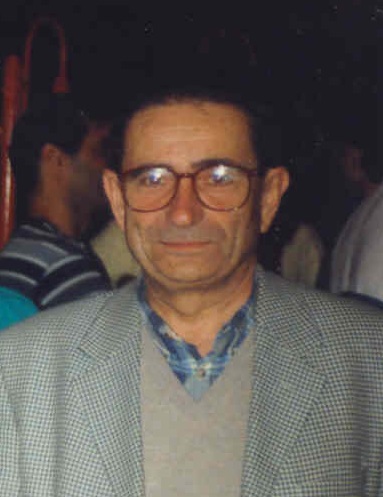
In memory of a colleague. In memory of a friend.
It’s very sad. Dr. Vladislav Ivanovich Rogalsky. Our, dare I say it, idol. Intelligent, highly educated, sociable. His name is known, without exaggeration, to everyone who dedicated themselves to Cospas-Sarsat. Easy-going natural manner, a great sense of humor, and an inexhaustible sparkle in his eyes. This is how many of us will remember him.
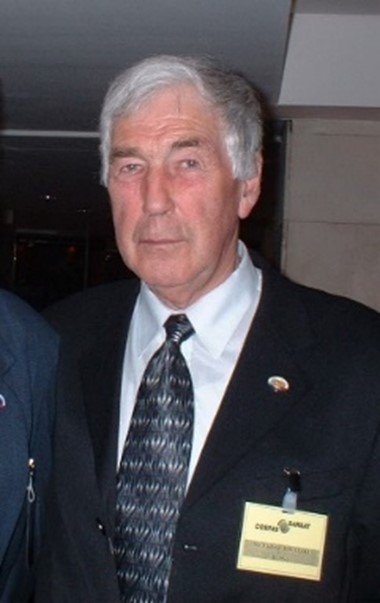
He passed away peacefully. He spent the last years of his life in his favorite place on Earth – the Sayan Mountains (Siberia). There, he reunited with the nature he adored: according to his will, his ashes were scattered there …
People pass away. That’s how our world works: a person is not eternal, but their memory outlives them, their memory endures.
An entire era of Cospas-Sarsat is passing. Vladislav’s life and work reflect, in a sense, the history of the creation and development of the Cospas-Sarsat Programme. Our collaboration began in 1979 with the signing of the first Memorandum of Understanding (MOU) in St. Petersburg (former USSR). Investing heavily in the development of different space systems, in the former USSR of that time, the need to provide assistance to seafarers in distress at sea was considered a priority, and the Ministry of Merchant Marine (Morflot) was appointed by the government as the agency responsible for organizing the implementation of the Cospas (Space System for the Search of Vessels in Distress) project. At that time I was working at the Morflot Main Computer Centre and was fortunate to become acquainted with this project and its enthusiasts (Mr. Yuri Zurabov, Mr. Arnold Selivanov, Mr. Vladislav Rogalsky, Mr. Yuri Bekhterev, and others) when they began looking for a site to install the first Soviet Cospas Mission Centre (MCC (Mission Control Centre)) and Information Reception and Processing Station (LUT (Local User Terminal)). Ultimately, all interested parties agreed that the Morflot Main Computer Centre, located in the very center of Moscow was an excellent choice, as it allowed for the use of its existing resources, including the qualified Main Computer Centге personnel (Mr. Anatoly Belousov, Mr. Vyacheslav Semikolenov and others). Solving new and interesting tasks proved to be quite successful, time flew by and in May 1989 I began working at the Cospas-Sarsat Secretariat (then the first Head of the Secretariat was Mr. Daniel Levesque). My mutual contacts and joint work with Vladislav, now within the Secretariat, were very successful, primarily due to the great job of Mr. Jim King, then the Technical Officer of the Secretariat.
The 1980s were, without exaggeration, a great, collaborative victory for the West and East, and a time of great achievements for Cospas-Sarsat. This was the period of the Cold War. But highly educated, dedicated enthusiasts from four countries (Canada, the former USSR, the USA, and France) accomplished the impossible and took the first steps toward creating the Cospas-Sarsat System.
Vladislav’s distinctive qualities, namely his inexhaustible enthusiasm, incredible work ethic, innovative ideas, and professional approach to colleagues, were in great demand at that time.
What immediately united Vladislav and me was that we both graduated from the same higher education institution (he before me) with a unique teaching staff, sometimes at the level of academics. In addition, both of us were travellers. Vladislav’s career took him around the world. He was a great traveler: mountains of the Western and Central Caucasus, the Urals, the Pamirs, etc. And his special love was the Sayan Mountains. He was a USSR Master of Sports in water tourism. In addition, he wintered for a year and a half in Antarctica as a radio operator with the Soviet Antarctic expedition.
More about Vladislav. Born shortly before World War II, Vladislav experienced its full horror as a child. He grew up and was raised to be very focused, sensitive, and reciprocate friendship with friendship. He knew what he wanted and achieved results. He worked at various research institutes, but ultimately found his calling at the Research Institute of Space Instrumentation (NIIKP). He worked on radio support for long-range unmanned spacecraft missions to planets in the solar system.
He valued nature and every moment of life within it. And through his work, he dreamed (and he did) of helping those in need, so that they wouldn’t die before their time! He said that each of us should strive to make the world a better place. What is the most valuable thing on our planet Earth? Yes, life. And we save it when necessary. We extend our stay on Earth. “Nature and man are one whole” – that’s Vladislav’s philosophy. He chose his own path. He loved and valued nature and the people within it. He even preferred to conduct field tests of radio beacons in his beloved Sayan Mountains.
English language. At first, he didn’t need it; he had translators, and not much contact with the West. But with the arrival of Cospas-Sarsat, at 50, he achieved the impossible: he began to speak tolerably well, enough for his professional colleagues to understand him without saying a word.
Regarding his family, he was survived by two sons and grandchildren, and his beloved wife Lyudmila passed away earlier.
Someone I know said the following about Vladislav: “The longer you talk to him, the more you realize he’s like an iceberg – you can only see the tip. A rich, amazing life, full of adventures and interesting encounters. A person can live their life this way and dedicate it to a worthy cause!”.
He was a happy man!
Vladislav got to meet in person Mr. Jonathan Ziegelheim, the pilot of the very first Cospas rescue in 1982 after that rescue and both were excited to meet each other. Vladislav served as the Cospas Project Manager for system interactions till 2014 when he retired from active work and settled in the Sayan Mountains, but he nonetheless remained very interested in events and our progress. He called me regularly. He was interested in the news from Cospas-Sarsat. He used to send greetings to his colleagues Mr. Rich Renner, Mr. Harvey Werstiuk, Mr. Ted Hayes, Mr. Bart Sessions, Mr. Dave Affens, Mr. Daniel Levesque, Mr. Jim King, Ms. Cheryl Bertoia, Mr. Dany St-Pierre, Mr. Andryey Zhitenev and others. In July 2022, we prepared an interview with him about his memories of the Cospas-Sarsat mission’s history. It’s full of interesting facts. Еven recently in my talks with him, Vladislav emphasized his hope for progress in the MEOSAR system, second-generation radio beacons (SGB), the return link service (RLS), and emergency tracking beacons with in-flight activation (ELT(DT)). He called for the use of our collective potential to maintain the high professional standards of our operators.
Among others, Vladislav repeated many times his firm conviction that the International Cospas-Sarsat Programme should be nominated for the Nobel Peace Prize. This nomination would highly reflect Cospas-Sarsat’s responsibility and commitment to humanitarian and peaceful work to save human lives. The human aspect of saving lives in distress is the cornerstone of our multinational project, which we began together many years ago.
Rest in peace, our dear Vladislav!
Dr. Vladislav Studenov
Former Operations Officer of the Cospas-Sarsat Secretariat (May 1989 – May 2017)
QAMCC Advisor (since June 2017)