Category: System Overview

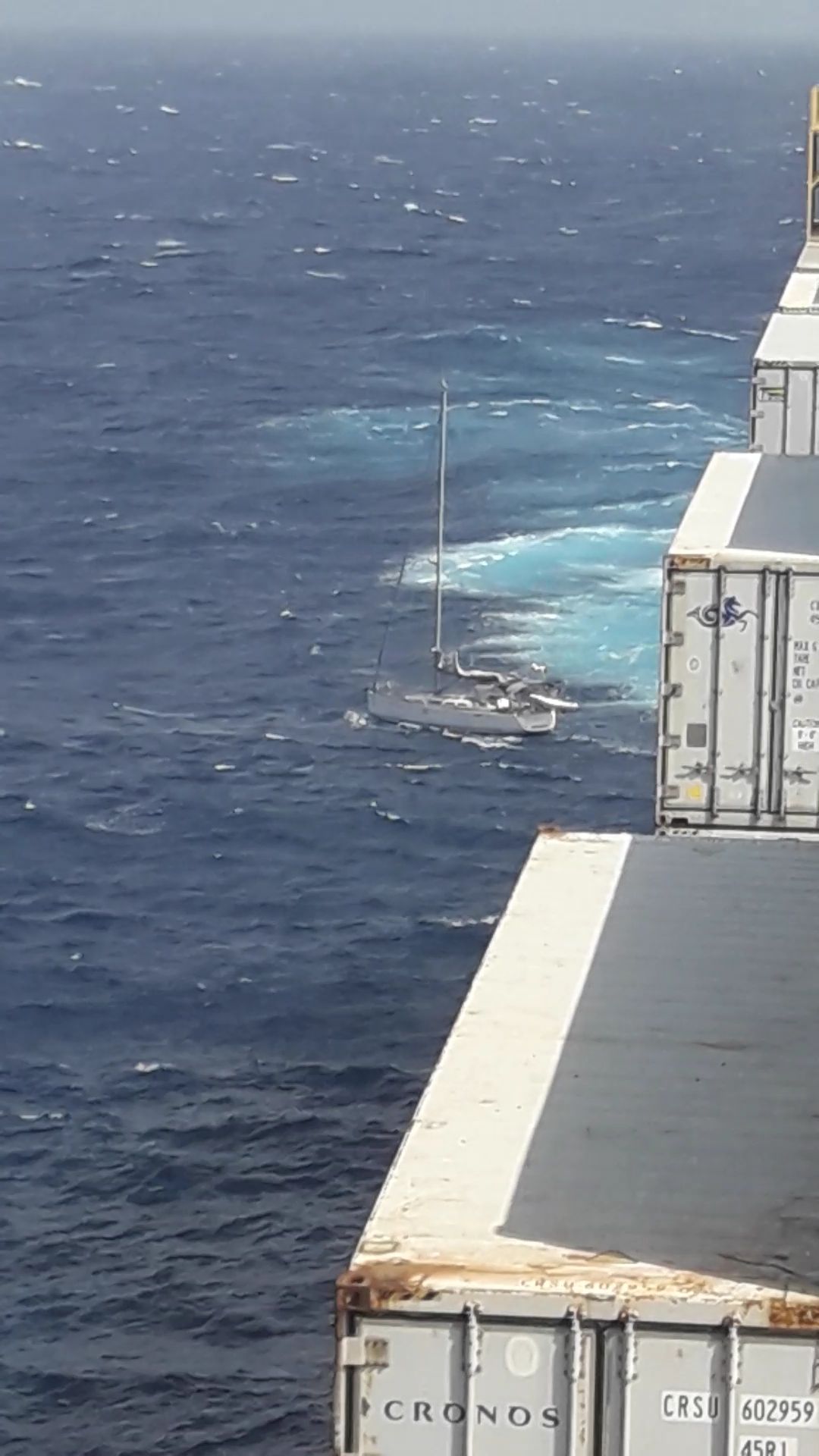
  • 2020-03-04 Container ship picks up French yachtsman off Colombia with 406 EPIRB

    On 11 February 2020, the French Mission Control Center relayed a distress alert transmitted by a maritime 406 MHz EPIRB to the MRCC Gris-Nez.

    After investigation, it turned out to belong to a French yachtsman alone on board his Dufour 45 sailboat.

    At 140 nautical miles north of Barranquilla (Colombia), the sailor was facing bad weather conditions with a ship not maneuvering due to rudder damage.

    MRCC Griz-Nez made a satellite call to all nearby vessels and transferred the alert to the MRCC Colombia.

    After six hours of rallying, a container ship answering the call arrived on scene at the same time as a maritime patrol plane dispatched by the MRCC Colombia.

    The sailor in distress was thus rescued safe and sound on board the container ship routing to Panama.

    Photo

  • 2020-02-17 Plea from New Zealand rescue survivor to register your beacon

    New Zealand has one of the largest search and rescue regions in the world, and when not everyone registers their beacon it wastes time and potentially costs lives.

    One of the small electronic devices saved the life of an avalanche survivor.

    “You’re in sort of a bit of a washing machine and I was trying to clear my mouth of snow and we would’ve come down about 200 or 300 metres,” she says.

    “I was totally buried with just my face out and I called out to the others, and [got] no reply.”

    Her two guides died, but the woman survived by digging her way out and setting off her emergency locator beacon.

    Without it, she would also have died.

    In 2019 there were 276 beacon alerts.

    Of these, 87 were real distress situations from registered beacons and 12 were from non-registered beacons.

    But there were 177 falsely-activated beacon alerts – 43 from non-registered beacons.

    “If the beacon’s unregistered we have no one to get in touch with to understand or start to triage the situation.”

    Read more here:
    https://www.newshub.co.nz/home/new-zealand/2020/02/survivor-s-plea-register-your-emergency-beacons.html 

  • 2020-02-05 What technologies have improved boating in human history?

    Curious about how boating has come to be so much fun, reliable, safer, and a compelling pastime?

    Read about Cospas-Sarsat being amid the top five revolutionary boating innovations throughout history listed here:

    https://tridentmarine.com.au/blog/top-5-innovations-boating-history/

  • 2020-02-03 Technology for saving human life

    TECHNOLOGY FOR SAVING HUMAN LIFE

    Over fifty people saved in 2019 thanks to the work of the Italian Cospas-Sarsat Satellite Station

    Fifty-three people were saved in 2019 through the Cospas-Sarsat support provided to the authorities in charge of search and rescue, located in 19 European and African countries. That’s the tally of the Italian Satellite Station Cospas-Sarsat in the past year, a goal reached thanks to the constant work done by specialized operators who, 365 days a year, 24 hours a day, monitor emergencies detected by Cospas-Sarsat satellites.

    Other relevant data is that of the transmitters registered in the 406 MHz National Beacon Database (managed by the same Station), which, at the end of last year, reached a considerable number of approximately 20,000 registered beacons. The most significant figure is represented by PLBs (radio transmitters for personal use), which reported an increase of 12% compared to 2018, demonstrating the widespread use that these emergency devices are gaining among users, thanks to their multi-purpose role in maritime, aeronautical and land environments.

    Broadening the scope to the last five years, the work done by the staff of the Italian Cospas-Sarsat Satellite Station has brought to bear the rescue of 349 people involved in 110 distress situations.

    ——

    TECNOLOGIA A TUTELA DELLA VITA UMANA

    Oltre cinquanta persone salvate nel 2019 grazie al lavoro della Stazione Satellitare Italiana Cospas-Sarsat

    53 persone salvate nel 2019 attraverso il supporto fornito alle autorità preposte alla ricerca e soccorso, dislocate in ben 19 paesi europei ed africani. Questo il bilancio della Stazione Satellitare Italiana Cospas-Sarsat nell’anno appena trascorso. Un risultato che è il frutto di un costante lavoro svolto da operatori specializzati che, 365 giorni all’anno, 24 ore su 24, monitorano situazioni di emergenza rilevate dai satelliti Cospas-Sarsat.

    Altro dato rilevante è quello dei trasmettitori inseriti nella Banca Dati Nazionale Trasmettitori 406 MHz (gestita dalla stessa Stazione) che, alla fine dello scorso anno, ha raggiunto il ragguardevole numero di circa 20.000 trasmettitori registrati.

    In quest’ultimo settore, il dato più significativo è rappresentato dal numero di PLB (radiotrasmettitori ad uso personale) che ha fatto registrare un incremento del 12% rispetto al 2018, a dimostrazione dell’ampia diffusione che tali strumenti di localizzazione stanno avendo tra gli utenti, grazie al loro impiego multiruolo in ambito marittimo, aeronautico e terrestre.

    Allargando l’orizzonte agli ultimi 5 anni, il lavoro svolto dal personale della Stazione Satellitare Italiana Cospas-Sarsat ha consentito di trarre in salvo complessivamente 349 persone, coinvolte in 110 situazioni di pericolo.
  • 2020-01-27 NOAA satellites helped save a record 421 lives in the USA in 2019

    Registered 406 emergency beacons are proven to save lives.

    The same NOAA satellites that helped forecasters track weather and wildfires were also critical in rescuing a record 421 people from potentially life-threatening situations throughout the United States and its surrounding waters in 2019.

    NOAA’s polar-orbiting and geostationary satellites are part of the global Search and Rescue Satellite Aided Tracking System, Cospas-Sarsat.

    Of the 421 U.S. rescues last year, 306 were water rescues, 38 were from aviation incidents and 77 were from events on land, where PLBs were used.

    Since its start in 1982, Cospas-Sarsat has been credited with supporting more than 48,000 rescues worldwide, including nearly more than 9,000 in the United States and its surrounding waters.

    Read more here:
    https://www.noaa.gov/media-release/noaa-satellites-helped-save-record-421-lives-in-2019 

  • 2020-01-22 Nearby French fishing vessel helps crew after 406 beacon alert

    On 12 January 2020 at 11:11 local time, the MRCC Gris-Nez informed the MRCC Etel of the triggering of a 406-MHz beacon with no known position and whose MMSI corresponded to a 12-meter fishing boat based at the port of Arcachon in Gironde, France .

    The investigations began with VHF calls to the vessel and to the fishing company’s boss’s phone number, all of which remained unanswered.

    The Cap Ferret semaphore provided assistance and indicated the boat’s habitual fishing routes, its working VHF channel as well as those of the other fishing vessels likely to be working in the vicinity.

    The MRCC Etel contacted two other nearby fishing vessels, and the second one confirmed that the vessel was indeed fishing in its sector, and, a few seconds later, that she had visual on an overturned hull and immediately set sail for the position.

    The MRCC Etel broadcasted a MAYDAY RELAY message.

    Very quickly, the crew of the second boat recovered a fisher who confirmed two missing crew members.

    Only three minutes later the boat rescued the missing two crew members from 12-degree waters.

    A teleconference with a doctor from SCMM 64 was initiated in order to establish a medical assessment of the three survivors.

    Leaving the wreckage behind, the fishing boat headed for the port of Arcachon with the crew safe and sound on board.

    The activation of the 406-MHz beacon had immediately identified the fishing vessel and the investigations thereafter quickly located the site of the sinking.

    Read more (in French) here:
    https://www.sudouest.fr/2020/01/13/bassin-d-arcachon-naufrage-d-un-bateau-de-peche-les-trois-marins-sauves-7055285-2733.php?fromsar=memeSujet 

    and (in English):
    https://www.bassin-arcachon-info.com/en/shipwreck-passes-arcachon/ 

  • 2020-01-10 406 PLB guides rescuers to Swiss tourist in Western Australia

    An injured Swiss tourist has been rescued from a gorge in Western Australia’s north after she activated her emergency beacon.

    Police found the 47-year-old woman at 6pm on Wednesday about 600m down Kalamina Gorge in the Karijini National Park, lying on the edge of a pool with a broken leg and possible wrist injuries.

    “Had the woman not had the PLB with her she may have remained injured and unable to move for an extended period of time.

    “PLBs and EPIRBs are critical pieces of equipment when hiking, especially in remote or rocky places,” the spokesman said.

    Read more here:
    https://www.theaustralian.com.au/news/latest-news/emergency-beacon-saves-swiss-tourist-in-wa/news-story/64f637e9666fb5af8c638fe9223e2843 

  • 2020-01-10 North Carolina shrimp boat crew in dire straits

    Four crew members were on a shrimp boat that sank in the Pamlico Sound of North Carolina Tuesday night for unknown reasons.

    Officials received the vessel’s 406 EPIRB distress signal and quickly launched a helicopter and a motor lifeboat.

    Two were rescued, suffering from hypothermia. The captain was given CPR, but was later pronounced dead at the hospital.

    The search continued for the two other crew members, but “this is a rough case and as we continue to search, our thoughts are with the families of the mariners”.

    The SAR coordinator for the case said, “We’re grateful for the EPIRB that was activated during the case, which enabled us to get resources on-scene as quickly as possible. A properly registered EPIRB is a vital and highly-recommended piece of equipment for mariners to have on their vessels.”

    Read more here:
    https://wcti12.com/news/local/two-missing-after-shrimp-trawler-sinks-in-pamilco-sound 

  • 2020-01-10 Harrowing disasters following Sydney boat race – 3 alerts in 30 minutes

    One boat was dismasted, another had a couple of injuries, and a third announced their keel had fallen off.

    Amid 48 knot winds, the boat faced “post-apocalyptic” conditions caused by the bushfires.

    The boat inverted, and one crew member removed a lifejacket to dive and retrieve the life raft.

    The crew put out a mayday call and activated its 406 emergency beacon, as well as using a personal location beacon, once they were in the raft.

    “I understand from the police that a helicopter spotted us. We were lucky as there were loads of emergency rescue people around because of the fires.”

    The crew was reported as otherwise without lasting physical injuries.

    Read more here:
    https://www.sailingscuttlebutt.com/2020/01/08/delivery-disasters-after-sydney-hobart/ 

This site is registered on wpml.org as a development site. Switch to a production site key to remove this banner.