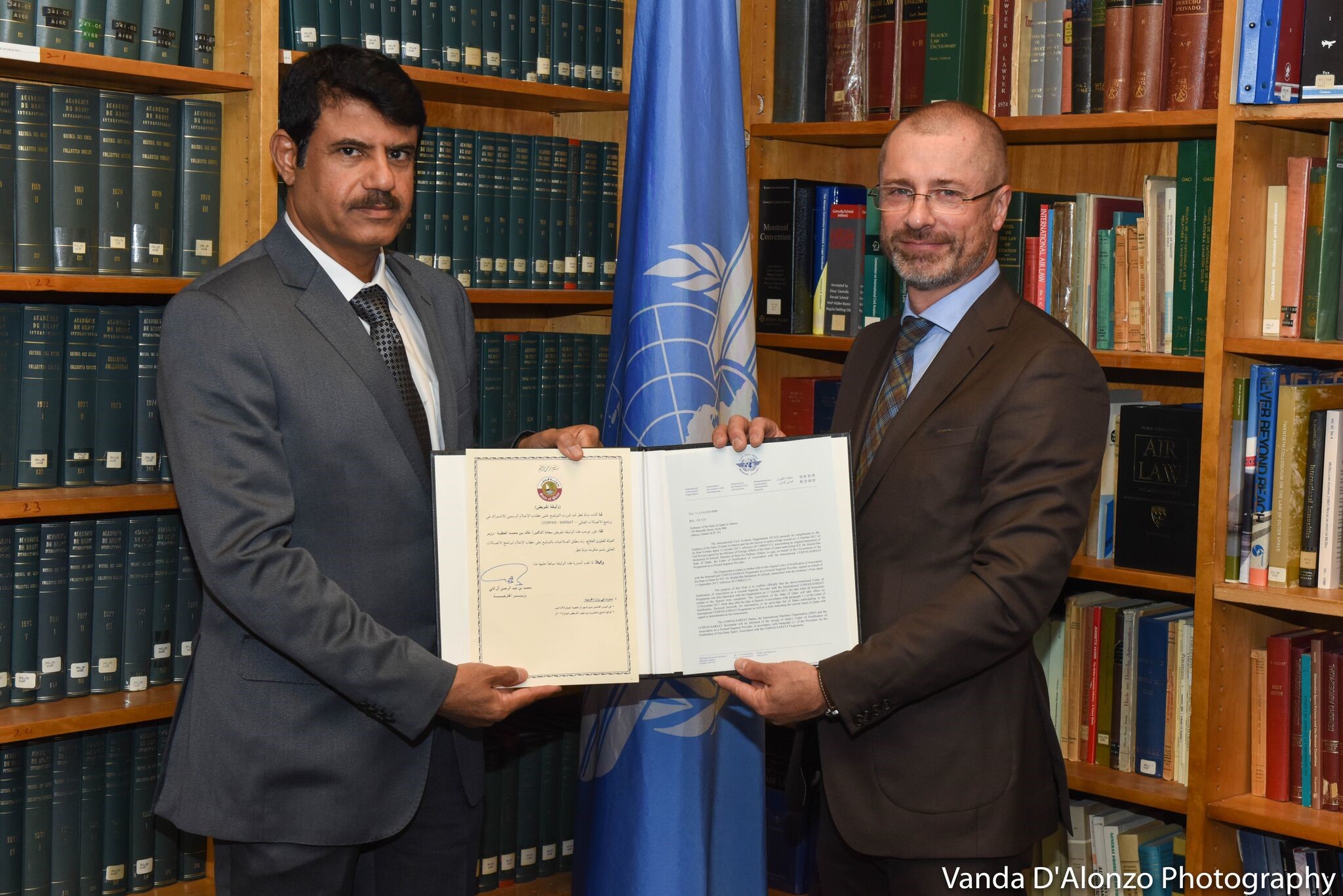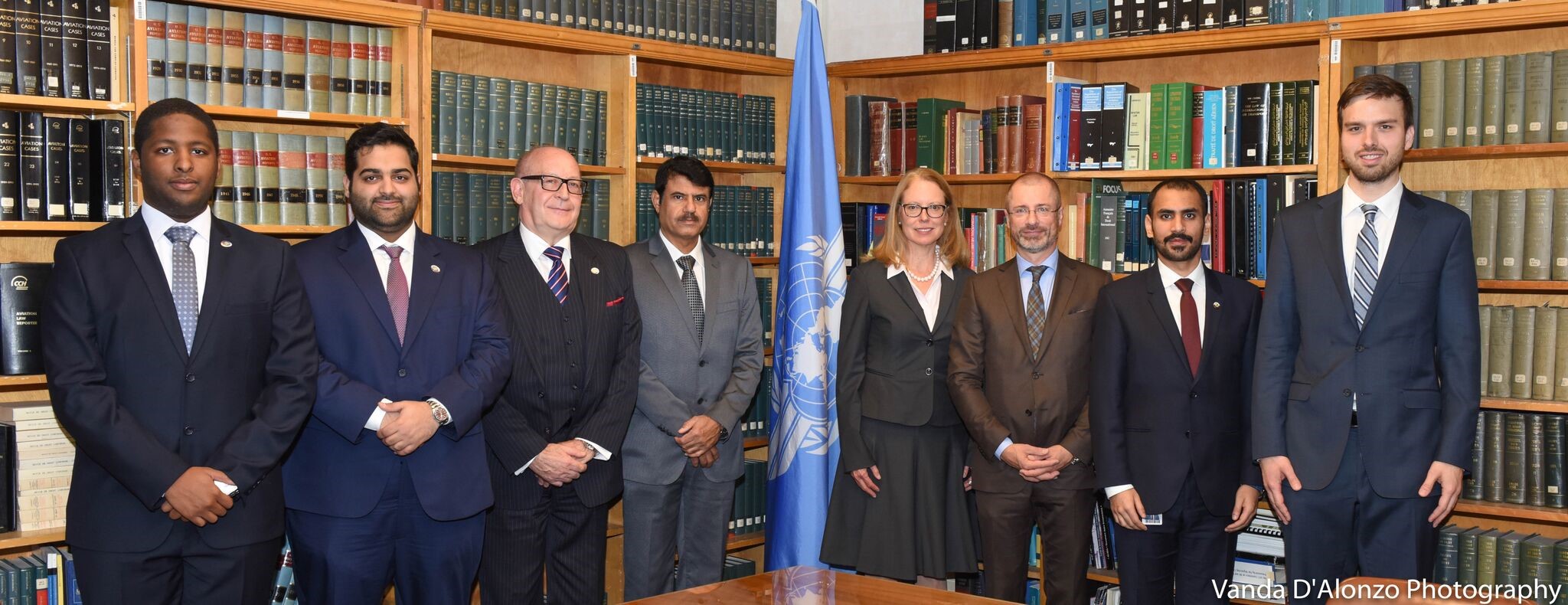
Further to the signed Letter of Notification of Association with the International Cospas-Sarsat Programme as a Ground Segment Provider, during the JC-31 Meeting on 20 October 2017, the State of Qatar deposited its letter to ICAO, one of the Depositories of the International Cospas-Sarsat Programme Agreement. The membership of the State of Qatar as the 44th Cospas-Sarsat Participant will enter into force on 12 November 2017.
Category: System Overview
-
2017-09-28 Swedish ELT helps rescuers locate a crashed helicopter
In northern Sweden on 26 September the Swedish Maritime Association / JRCC received MEOSAR and LEOSAR satellite signals from an ELT activated 30 miles west of Luleå.
The JRCC initiated and coordinated a SAR mission with rescue units from municipal rescue services, police, and several airborne units, including a SAR helicopter from the Swedish Maritime Association.
The wreckage was found in forest terrain 98 minutes after the initial (MEOSAR) message was received.
A flight crew of two persons had been conducting airborne power line inspections and crashed for unknown reasons.
One crew member died and the other was seriously wounded.
-
2017-09-21 Summary of FMCC activity – July and August 2017
Please click to access the Summary of FMCC activity – July 2017.
Please click to access the Summary of FMCC activity – August 2017.
-
2017-09-19 ITMCC Service Area – Monthly Activity Report – August 2017
Please find the link here to the ITMCC Service Area – Monthly Activity Report – August 2017
-
2017-09-12 MEOSAR helps mobilize a faster rescue in Australia
An Australian boater has been rescued after his boat struck a reef and began to sink in the early hours of Sunday morning.
He set off his EPIRB, and MEOSAR data was received and a rescue enacted before the LEOSAR and GEOSAR data had arrived.
Local police urge owners of second-hand vessels to have their beacons re-registered with updated contact details.
-
2017-09-12 Light plane’s beacon triggered after crash in Australia
A distress message was sent from a distress beacon (ELT) after a light plane went down just past the runway in New South Wales, Australia.
The data received from the beacon transmission all indicated that it was near to the airport.
The pilot, aged 25 and a passenger, also 25, were injured in the crash. A witness thought that it was a drone, and watched it roll and heard an explosion.
Crash investigators are looking into the causes of the crash.
Watch video here:
http://www.9news.com.au/national/2017/09/09/05/05/man-in-critical-condition-after-light-plane-crashes-on-nsw-mid-north-coast -
2017-09-12 35th Anniversary of the First Cospas-Sarsat Save
The first Cospas-Sarsat satellite was launched 35 years ago on 30 June 1982, and on 10 September 1982, three Canadians were rescued from a crashed light aircraft thanks to a signal received by satellite.
Read more (see Chapter 2, pages 23 to 25): The History and Experience of the International Cospas-Sarsat Programme for Satellite-Aided Search and Rescue
-
2017-09-07 Australian motorbike rider with broken leg sets off beacon
Once alerted the search was conducted by Police and a roadside assistance group rescue helicopter.
Thanks to the team work and beacon the man was located, safely driven to the helicopter and flown to hospital for medical treatment all within a 2 hour time frame.
Read more here:
https://www.southburnetttimes.com.au/news/rescue-shows-importance-distress-beacon-police/3220213/ -
2017-09-01 New Zealand couple spend cold night outdoors after boat wrecked, no beacon on board
The wet and cold pair had been stranded on the rocks for 11 hours with no way to call for help.
The alarm was only raised the next morning by a passing boat.
“These [people] ignored the safety basics. Learn from their example, if you’re heading out on the water. Take two waterproof ways to communicate – preferably a marine VHF radio and a distress beacon and wear your lifejacket. Know your limitations and those of your vessel.
“Always tell somebody ashore where and when you’re going, and when you expect to be back.
“You’ve got to be prepared for emergencies. Everyone on board a boat less than six metres should wear a lifejacket at all times. Most accidents occur suddenly, with no warning.
“There may be no time to grab a lifejacket, and it’s extremely difficult to put on a lifejacket in the water. Many boaties drown less than 200 metres from shore.”
Read more here:
http://www.nzherald.co.nz/nz/news/article.cfm?c_id=1&objectid=11915513 -
2017-09-01 Distressed family rescued from remote South Pacific reef
A 50-foot catamaran with two adults and two children on board ran hard onto Beveridge Reef in the South Pacific, northeast of New Zealand.
The crew activated their EPIRB which led to multiple MEOSAR and LEO detections, and a nearby sailboat was tasked to come to their rescue.
The rescue sailboat had been anchored in the reef’s lagoon on their way to help with a study of humpback whales.
Read more here: