Please click to access the:
Рубрика: Новости
-
2026-11-12 | Harrowing rescue for elderly man and his dog after two months stranded at sea
It was a harrowing rescue for elderly man and his dog after two months stranded at sea.
The boat captain had been attempting a 5,000 mile journey from Oregon to American Samoa.
The boat happened to have a leftover 406 EPIRB on board from a previous owner.
He had run out of fuel early in the journey but was confident that things would turn out, and it wasn’t clear what had gone wrong.
Rescuers in the U.S. Coast Guard said that it was «incredibly lucky on his part» that he had the 406 EPIRB on his vessel.
Read more here:
Coast Guard Details Harrowing Rescue of 86-Year-Old Man and Dog
-
2026-11-02 | Visit of the Honourable Eleanor Olszewski
The Cospas-Sarsat Secretariat was delighted to welcome the Honourable Eleanor Olszewski, Canada’s Minister of Emergency Management and Community Resilience, to its offices in Montreal on Friday, 30 October 2026.
The Minister recognized the value of international cooperation in harnessing space technology for the benefit of humanity and saving lives.
Discussions highlighted the importance of raising awareness of Cospas-Sarsat’s beacons life-saving capabilities, particularly in remote and northern communities, including Nunavut.
The Minister expressed her support for promoting greater visibility of the Programme and its work.
A valued visit and an encouraging step toward strengthening awareness of this global humanitarian mission.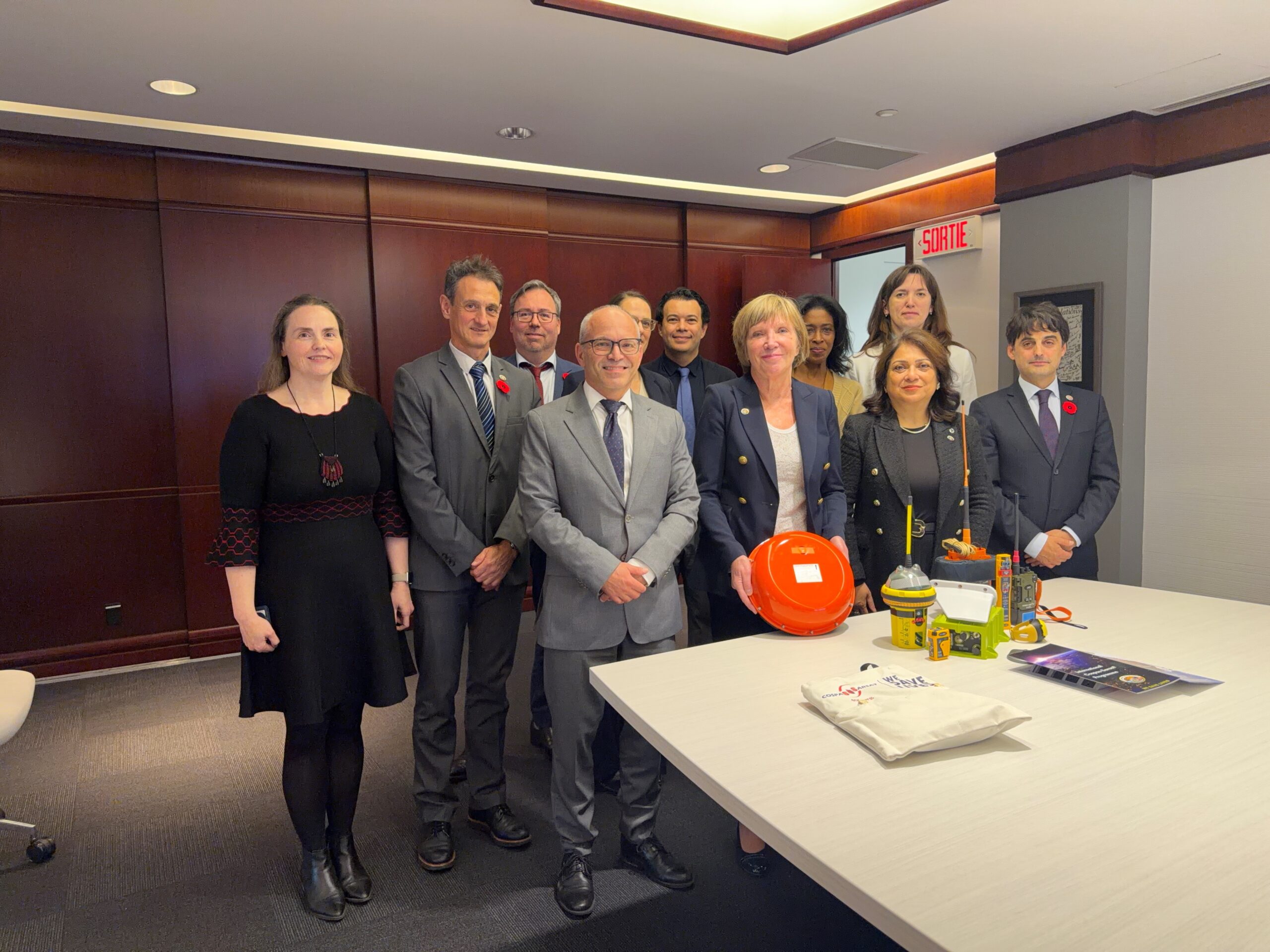
-
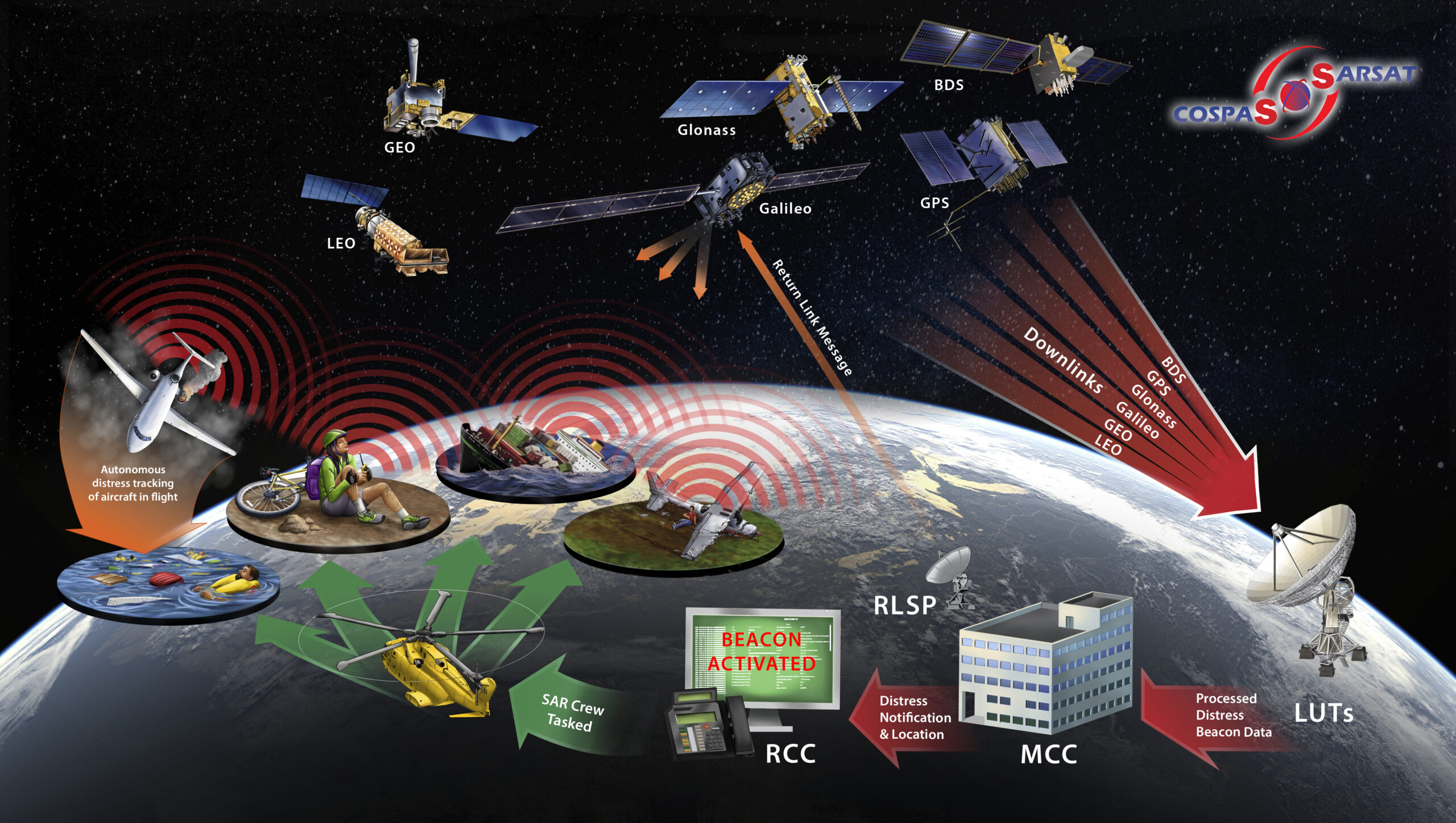
2026-11-02 | A major milestone for the Cospas-Sarsat Programme!
Effective 2 November 2026, the Cospas-Sarsat System has been declared at Initial Operational Capability (IOC) for Second-Generation Beacons (SGBs) based on the MEOSAR System, following the decision of the 75th session of the Cospas-Sarsat Council (CSC-75).
This achievement reflects years of dedicated work, technical innovation and close collaboration among the Cospas-Sarsat Administrations, partner organizations, industry and international organizations, including ICAO, IMO and ITU.
Second-Generation Beacons can transmit more information, provide improved accuracy in locating people in distress and help search and rescue services respond more effectively.
Another important step forward in strengthening the global satellite-based search and rescue system and our shared mission of saving lives.
-
2026-10-19 | Summary of FMCC activity — September 2026
Please click to access the:
-
2026-09-30 | EPIRB Key in Rescue of Four After Yacht Strikes Whale in South Pacific
Four sailors have been rescued from a life raft in the South Pacific after their yacht struck a whale and began taking on water about 250 nautical miles north of Norfolk Island.
This was a well-coordinated and executed rescue,” RCCNZ Operations Manager Mike Clulow said. Clulow said the yacht’s crew had been well prepared and credited the early activation of the EPIRB with helping rescuers locate them quickly.
https://gcaptain.com/cma-cgm-ship-rescues-four-after-yacht-strikes-whale-in-south-pacific/
-
2026-09-23 | 3 August 2026 Helicopter rescue in Wellington NZ
In rough conditions, everyone was wearing life jackets, and they also had their 406 PLB.
Good preparation is key to a successful rescue.
Video footage:
https://www.facebook.com/reel/1375795034688990
-
2026-09-18 | Global SAR Day Interview with Cheryl Bertoia
CJAD-AM interview with Ms Cheryl Bertoia
on the Elias Makos Show with Trudie Mason
10 September 2026 at 11:10:00 in Montreal, Canada on Global Search and Rescue DayTranscript
TM: …Stay tuned for that.
Did you know that 10 September, today, is Global Search and Rescue Day? Why 10 September? It is the anniversary of the first-ever satellite-assisted rescue in history. It occurred here in Canada in 1982, and the day, Global Search and Rescue Day is designed to pay tribute to people involved in the global search and rescue network.
We’ll talk now with someone with the International Cospas-Sarsat Programme. That’s a real mouthful. It’s based here in Montreal and it is key to keeping people safe. Cheryl Bertoia, thank you for joining us on CJAD.
CB: It’s great to be here. Thank you very much, Miss Mason.
TM: Cheryl is Principal Operations Officer and Deputy Head of Secretariat for the International Cospas-Sarsat Programme. Again, a little bit of a mouthful there… Tell us what the Programme is all about, Cheryl.
CB: I’d love to. Cospas-Sarsat, it is a mouthful of an acronym, unfortunately, but it can be simplified into understanding that it is a global satellite system that listens for emergency distress beacons anywhere on Earth. So whenever a person in a distress situation activates a distress beacon, they could be at sea, they could be in the mountains, they could be flying in a plane… our satellite system detects the signal and shunts it on to search and rescue authorities around the world. And I think a really interesting part of our Programme is that the service is free of charge to anyone in a distress situation.
TM: Is there international support for the Programme? Which nations are in on supporting it?
CB: Oh, there is very much international support for the Programme. The original four founding countries were the USA, Canada, France and the Soviet Union, of course now Russia. But since then we’ve been joined by many more countries around the world and have over forty-five member states and organizations supporting our System.
TM: And by supporting, do, they also contribute to, for example, the maintenance of the satellites? The staff that listens for alerts?
CB: Yes, they do. Indeed they do. The satellites themselves, they do all the design and development for the sensors that are carried aboard the satellite. They operate the antennas that receive the signals and what we call Mission Control Centers, which are giant data routers that take all of this satellite data, make it into a man-readable format and send it to the great folks who put their lives at risk, rescuing people in distress. These are the Rescue Coordination Centers.
TM: It makes sense to me, for example, that, you know, an oil tanker might have one of these beacons; an airline sending planes overseas; but can anybody get one of these beacons in order to ensure their safety in the event of an emergency?
CB: Absolutely, so the two examples that you gave are actually what we call our regulated market, so the United Nations agencies that are responsible for safety of life at sea and for international air travel do require carriage of our beacons. However, anybody can buy a beacon, because emergencies don’t happen only to those aboard aircraft or ships. They happen not only to explorers. It can happen to anyone: boaters, pilots, hikers, hunters, snowmobilers, even families traveling in remote areas. Anyone can find themselves beyond cell phone coverage, and a distress beacon gives you that safety of a direct connection to our international search and rescue System.
TM: Have there been any technological advances that have helped the work of this System since it was set up?
CB: Yes, absolutely, there have been numerous, but the three that we are really celebrating this year are the return link service, which allows a confirmation to people in distress that their alert has been received. This is almost a messaging system that sends a message to the beacon, giving the user in distress confidence that help has been notified. We also have a new type of aviation beacon which allows aircraft to automatically transmit their position when abnormal flight conditions occur, even before any potential impact. And the latest developments on the satellite side are the MEOSAR satellites. These are probably most commonly known as GPS-style satellites where we use multiple satellites simultaneously to pinpoint a beacon location and this happens very fast, within minutes.
TM: You mentioned that the service is free, but I assume there’s a cost to obtaining one of these beacons. And then, is it possible you get dinged for your rescue by whatever country has to send people to rescue you?
CB: There is indeed a cost for the beacon itself. Those are commercial products. Our role as the International System is only to certify that they operate with our satellite system. The cost for rescue is considered an inherently governmental responsibility in countries around the world. So if you are genuinely in a distress situation, there is no charge for the rescue itself and indeed many of the vendors of our beacons will replace your beacon for free if you use it in a real distress situation.
TM: This is one of the organizations I wasn’t aware is based in Montreal, an international organization here. How many people do you have based here that are contributing to the running of the Programme?
CB: Our headquarters in Montreal has been here since 2005. Before that we were collocated with the International Maritime Agency, that’s the UN agency that mandates carriage of our beacons on commercial shipping. Now we’re collocated in Montreal, with ICAO, the International Civil Aviation Organization, because again of the intersection with the safety responsibilities. Our staff here in Montreal is quite small. Our Programme headquarters only has about twelve people in it at any given time. But the global Programme is much larger with thousands of people involved.
TM: Well, if you’re monitoring twenty-four hours a day around the world, the I would expect that requires quite a bit of manpower.
CB: Yes, of course, at the Mission Control Centers themselves.
TM: And there are some three dozen of those, I believe.
CB: Yes, exactly, and the Canadian Mission Control Center is in Ontario, located in Trenton,
TM: Also site of a major Canadian Air Force base. So again, kind of dovetailing on the aviation aspect of that, I would guess.
CB: Yes, of course.
TM: Cheryl, thank you very much for helping us to learn more about this important Programme.
CB: Excellent! And I think an important message for your listeners is that behind every distress alert, someone is listening, and that’s what we’re here to celebrate today on Global Search and Rescue Day… the people who are dedicated to saving lives around the world.
TM: Cheryl Bertoia, Principal Operations Officer and Deputy Head of Secretariat for the International Cospas-Sarsat Programme, based here in Montreal.
-
2026-09-18 | Artemis II ANGEL beacons
For Artemis II, NASA is equipping Cospas-Sarsat second-generation beacons called Advanced Next-Generation Emergency Locators (ANGEL) on the astronauts’ life preservers and installing another location beacon onto the Orion capsule so both can be located quickly. The ANGEL beacon is a palm-sized device that integrates into the Orion Crew Survival Systems suit the astronauts will wear during launch and landing. If there is a contingency, such as a launch abort or landing outside the target splashdown zone, the ANGEL beacons will allow NASA’s Search and Rescue team to find the astronauts.
In this video, Astronaut CDR Andre Douglas, discusses the important role of Cospas-Sarsat and the Angel beacon in the safety of the astronauts on the Artemis II mission.
https://www.dvidshub.net/video/1022056/us-sarsat-stakeholder-training-august-25-27-2026-andre-douglas-astronaut-welcome-message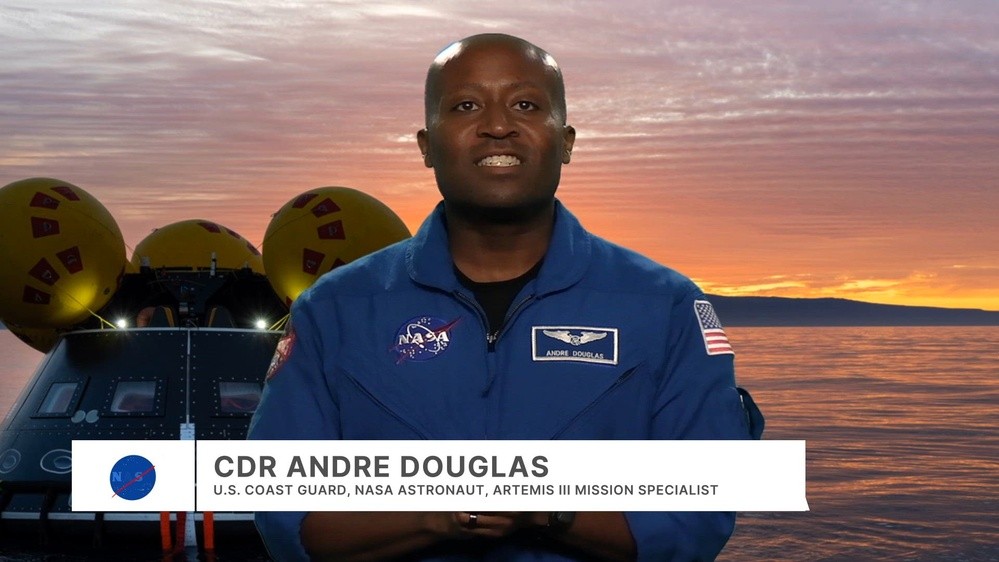
-
2026-09-04 | Adventures with Zander and his 406 PLB — Haida Gwaii
Adventures with Zander and his 406 PLB (personal locator beacon) — Haida Gwaii
https://www.instagram.com/p/Dc3uIP4i3Ur/
@daszander #406beacon #rescuebeacon #searchandrescue -
2026-09-03 | Adventures with Zander — 406 Beacon Test
Follow Zander on his adventures as he tests a 406 Beacon
https://www.instagram.com/cospas_sarsat_406/reel/Dc1GuxyimqT/
-
2026-05-15 | ‘Pretty miraculous’ — 11 rescued after pilot ditches plane in Atlantic
On 12 May 2026 at 1518 UTC (1118 EDT) an Emergency Locator Transmitter (ELT) was detected at 27 52.5N 79 29.4W, 60 NM southeast of Melbourne, FL.
It activated when an aircraft, with 11 people on board, crashed into the water after experiencing engine trouble and running out of fuel.
Coast Guard District 7 received the alert and coordinated with the Air Force Rescue Coordination Center, which diverted a nearby aircraft to the coordinates that located the pilot and passengers in a life raft.
The Air Force then launched a helicopter to the scene, rescued the 11 people from the life raft, and transported them to awaiting emergency services in Melbourne.
11 SARSAT RESCUES