Author: kevin

  • 2021-02-24 | A 406 beacon could be the difference between life and death

    A New Zealand dirt bike rider activated his 406 PLB on 8 February in the Akatarawa Forest Park near Wellington after breaking several bones in his right leg.

    He was coming around a corner at less than 15 km/h when his bike skidded on rocks and his right leg twisted out at a 45-degree angle as it caught on a rock behind him.

    He heard his leg snap as his tibia and fibula broke in two. His ankle was also broken.

    He bought his 406 beacon almost 10 years ago and has taken it on every ride, but this was the first time he used it.

    “There was no cellphone coverage where we were so my friend went up to the main track to see if he could get any coverage there. He couldn’t, but he ran into some rangers who came back with their utility vehicle. They had a radio and told us help was already on the way.”

    A paramedic was winched down but the helicopter was unable to lift Reed from the scene, so he was strapped to the back of the ranger’s utility vehicle and driven about 5 km to the nearest helipad.

    “The four to five kilometres or so strapped across the back of the utility vehicle along the rocky Karapoti trails was the most painful experience of my life,” he says.

    The bumpy journey was prolonged by frequent stops so that the paramedic could give him more pain medication.

    Read more here:
    https://www.stuff.co.nz/dominion-post/news/wellington/124334141/rescued-dirt-biker-one-of-100000-kiwis-carrying-distress-beacons 

    https://www.miragenews.com/it-could-be-difference-between-life-and-517838/ 
  • 2021-02-12 | The little 406 device that could save a life!

    At approximately 1pm on Saturday, 6 February, the Australian Maritime Safety Authority in Canberra picked up a distress signal that had been relayed by satellite from a 406 PLB that had been activated in the Crediton State Forest near Eungella, Australia.

    While en route to the location provided by the 406 beacon, police were notified that a hiker had suffered a medical emergency deep in the forest and needed urgent medical assistance.

    The Queensland Ambulance Service (QAS) joined the search and located a group of six hikers in the exact location where the 406 beacon had been activated.

    The incident highlights the life saving capabilities of 406 PLBs when adventuring or working in remote areas where there is little or no mobile phone service.

    The area in Australia has a “Get Lost” program that provides free 406 beacon rentals, a joint initiative between the police service and community partners.

    Read more here:
    https://mypolice.qld.gov.au/mackay/2021/02/09/the-little-device-that-could-save-a-life/ 

  • 2021-02-08 | Broughton Island, Australia rescue: four escape injury after boat sinks off Port Stephens

    Four men on a spear-fishing trip were rescued after their boat sank off Port Stephens and were praised for carrying safety equipment, including flares, and wearing lifejackets.

    The men had to be pulled from the water by a passing boat after their 4.8-metre vessel sank 1.5km north-east of Broughton Island about 7.20am.

    They activated a 406 EPIRB as the incident unfolded which allowed the Australian Maritime Safety Authority and the NSW Police Marine Area Command to task both the Westpac Rescue Helicopter Service and Marine Rescue Port Stephens to the site.

    They were in the water floating on coolers for about 45 minutes and it was only once they set off a fifth flare upon seeing a fishing vessel on the horizon that they were rescued.

    “It was a very successful outcome and I think there is a very good lesson to be learnt … and that’s the fact they had one of the emergency packs with them which allowed them to float away from the vessel as it sank and the pack contained everything they needed, particularly flares and an EPIRB,” the rescue unit commander said.

    Joseph Zeller, of the AMSA Response Centre, praised the group’s preparation.

    “Because the vessel owner had done all the right things – registered the EPIRB, told his emergency contact where they were going and when they were expected back home – we were able to initiate a rescue quickly, knowing what we were dealing with,” he said.

    “Setting off the flare resulted in a rescue soon after their vessel capsized, which meant that when rescue authorities arrived on scene, the four people were out of immediate danger.

    “We can’t stress enough the importance of having your safety equipment in order. This rescue is a good example of how smoothly rescue authorities and others around you can respond when you have the right equipment, it’s accessible in the event of an emergency, and you know how to use it.”

    Read more here:
    https://www.newcastleherald.com.au/story/7089316/lessons-to-be-learnt-four-men-praised-for-carrying-safety-gear-after-boat-sinks-off-hunter-coast/?cs=12 

  • 2021-02-05 | Beacon registrations rise as more New Zealanders take to outdoors

    New data compiled by Maritime NZ’s Rescue Coordination Centre NZ (RCCNZ) shows Kiwis are taking safety seriously as greater numbers head outdoors.

    RCCNZ Deputy Manager Operations, Neville Blakemore, says distress beacon registrations in December 2020 were up almost 30 percent on the previous year, with more than 2000 registered.

    The range of beacon use was demonstrated in one day recently, when RCCNZ responded to five beacon alerts encompassing – two people clinging to an up-turned dinghy; a person in a Kahurangi National Park hut who had had a medical event; a motor-cyclist who had crashed his motorcycle in the hills north of Naseby; a person who had become violently unwell on the Hump Track; and a tramper who had become isolated and disoriented on the Te Araroa Trail.

    Read more here:
    https://www.miragenews.com/beacon-registrations-rise-as-more-kiwis-take-to-507707/ 

  • 2021-02-05 | MRCC Gris-Nez: Merchant vessel helps sailboat bound for West Indies

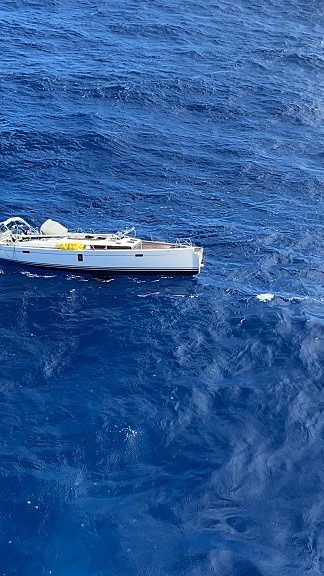
    On 28 January 2021, the MRCC Gris-Nez received a distress alert from a sailboat located about 500 nautical miles west of Cape Verde.

    The skipper confirmed his distress by satellite phone.

    Initially going to the West Indies, he tore his mainsail and tried to turn the vessel around but ran out of fuel.

    The MRCC Gris-Nez diverted a merchant vessel bound for Dakar to assist the sailboat.

    Arriving in the area on the morning of 29 January, the merchant vessel managed to board the two people but was forced by the sea conditions to leave their sailboat adrift.

    Their arrival in Dakar was scheduled for the morning of 1 February.

    Photo: Sailboat left adrift
     
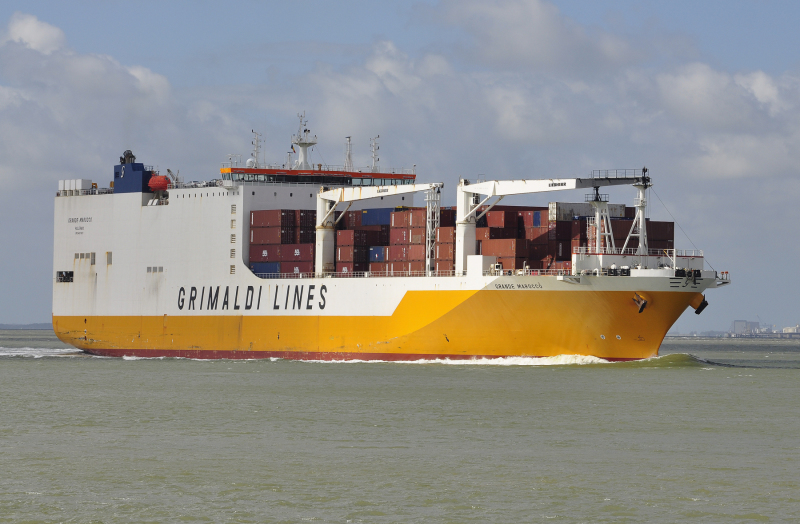
    Photo: Merchant vessel that assisted the sailboat

  • 2021-01-28 | State of Qatar SAR Training Centre and Workshop/Seminar

    Following the establishment on 1 December 2020 of the National SAR Training Centre (SARTC) in the State of Qatar, the first SAR Workshop/Seminar under the auspices of SARTC will be held every Tuesday in the period from 9 February to 2 March 2021 prior to the coming SAREX-2021 that is scheduled in March 2021.

    16 presentations on SAR matters will be given, including on the Cospas-Sarsat System, which is recognized as a very essential element and tool for conducting SAR exercises.

    More information on this event will be presented at the upcoming CSC-64 Open Meeting to be held 17-26 March 2021.

    Note that a courtesy Arabic translation of the System Data No.45 document is also available in addition to the English, French, and Russian versions.

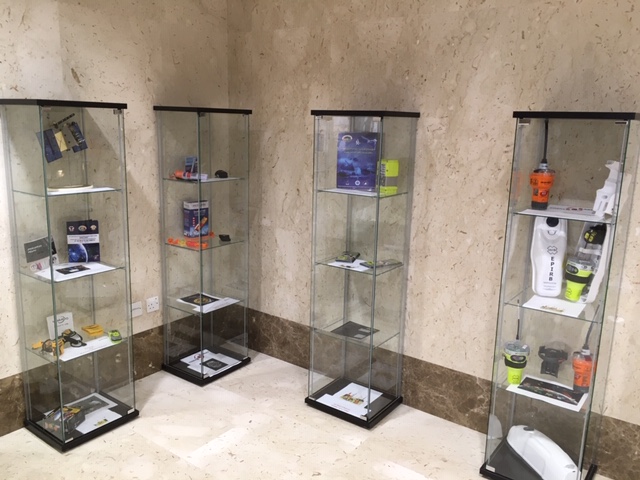
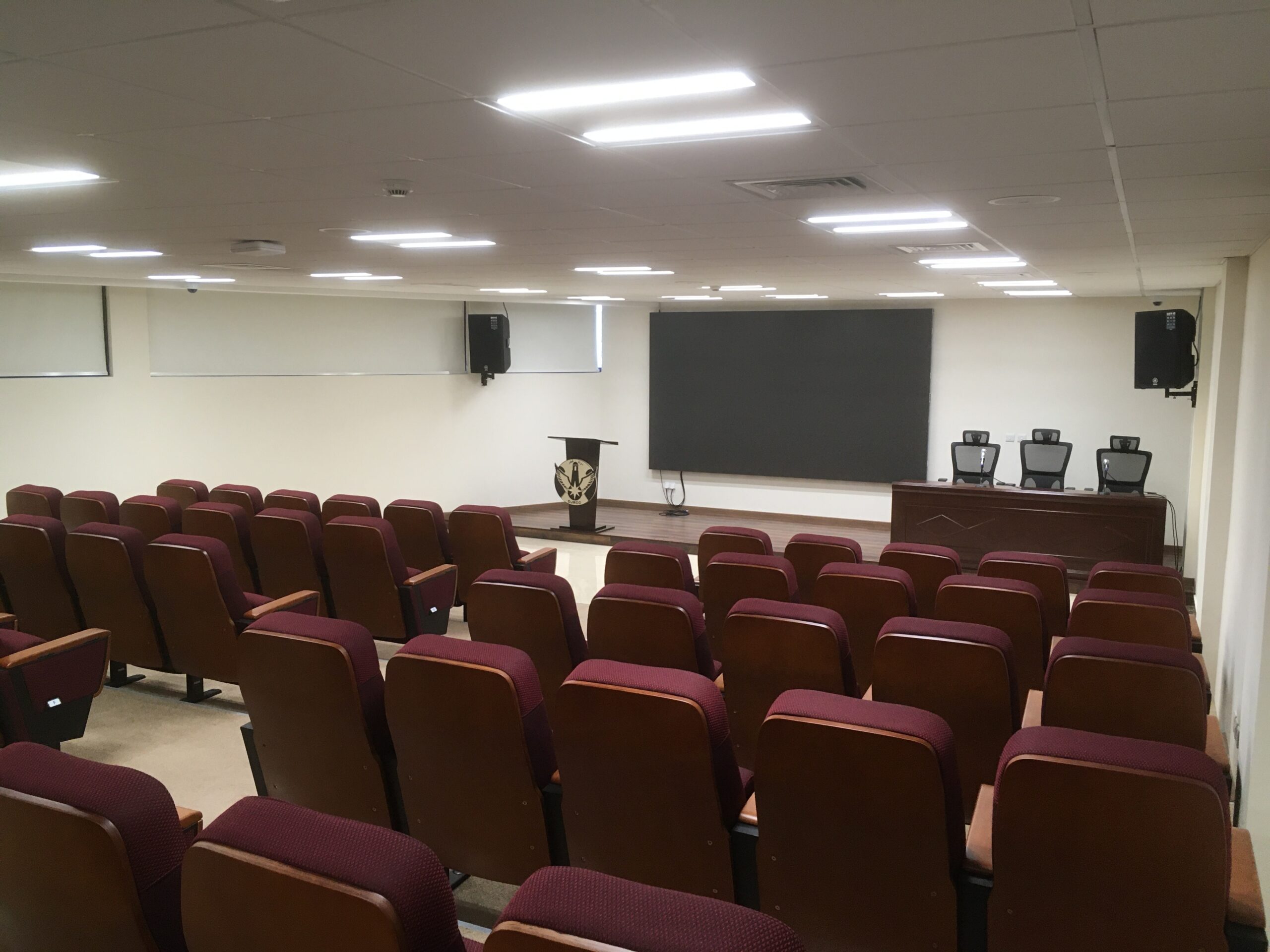
    Beacon display photo |  Conference room photo

  • 2021-01-19 | FMCC SAR operation on the French island of Corsica

    On 12 January 2021, flying over a snowy mountain environment near Monte Renoso and in strong winds, a helicopter pilot knew he was in trouble and decided to attempt an emergency landing on a safe spot.

    He managed to touch ground and the helicopter rolled over.

    Thanks to the thick layer of snow that softened the landing, the passenger and pilot were safe and sound.

    The 406 ELT was automatically triggered on impact and was the first and only means of alert.

    The French MCC received a distress signal from the Hugues 300 helicopter, at first from the French MEOLUT, at 13:06:46.

    Sent automatically to the French Aeronautical SPOC, ARCC Lyon, this initial information was followed up at 13:07:37 by a beacon alert message containing an estimate of the independent location of the aircraft.

    Having a confirmed position, ARCC Lyon transmitted the data about the helicopter and its location to the SAR units in Corsica, in the Mediterranean, while the signals were still being sent.

    The pilot and passenger, meanwhile, managed to get out of the aircraft and decided to walk in the snow in the direction of the village in order to find a phone signal to call for rescue.

    In coordination with the ARCC Lyon, a rescue helicopter from French “Sécurité Civile” was tasked one hour after the first alert and sent to the given location with a team of mountain rescuers (PGHM d’Ajaccio/Corse).

    The wreck was found empty.

    An hour and a half after the crash, the two survivors found a phone signal and provided their current position, where the rescuers picked them up.

    Thanks to the 406 ELT beacon, which transmitted the signal received by the MEO satellites constellation, and to the confirmed position being sent rapidly, the SAR operation was a success and two lives were saved.

    As a general piece of advice, unless you have a very good reason to move away from the crash site, staying in the vicinity of the wreck for at least a couple of hours may help you to be found faster; noting that the new MEOSAR system allows an accurate alert to be transmitted to SAR services in under 10 minutes, SAR units are typically ready to start responding in less than an hour, and are also able to receive the homing signal transmitted by the beacon.

    Read more here (in French):

    https://france3-regions.francetvinfo.fr/corse/meteo-helicoptere-atterrit-catastrophe-au-pied-du-monte-renoso-1914468.html 

    https://www.facebook.com/gendarmeriedecorse/posts/1281781535535332 

  • 2021-01-19 | New Zealand Hikers reminded that 406 beacons save lives

    Two hikers set up camp for the night in Fiordland National Park, New Zealand, and activated a 406 personal locator beacon the next morning after the woman of the pair injured her ankle.

    The spokeswoman said a rescue helicopter from Southern Lakes Helicopters was sent to rescue the stranded pair.

    “Distress beacons save lives. Carry at least two types of reliable emergency communications that will work even if they get wet,” the spokeswoman said.

    “You can’t always rely on a mobile phone because it might be out of range, run out of battery or be damaged by water.”

    The centre then received another personal locator beacon alert from a cyclist on the St James Cycle Trail in North Canterbury about 10am on Thursday.

    A rescue helicopter from Nelson flew the man to Nelson Hospital.

    Thursday’s rescues come after three climbers were rescued at Aoraki/Mt Cook National Park on Wednesday.

    Two women and a man were separately winched off the summit ridge of Mt Malte Brun after activating their 406 beacon at 6pm.

    The Department of Conservation Alpine Cliff Rescue Team and Helicopter Line successfully rescued the party by 9.30pm.

    “No-one was injured, but they were stuck in difficult terrain at 3100 metres altitude with no food and water – following an unplanned night on the mountain,” the spokesman said.

    On 30 December, two other climbers were rescued in a complicated 15-hour mission after a rock slide in steep terrain at Aoraki/Mt Cook National Park. One of the climbers was badly injured.

    Read more here:
    https://www.odt.co.nz/regions/southland/rescued-after-using-beacon 

    Also here: https://www.stuff.co.nz/national/123957073/trampers-reminded-locator-beacons-save-lives-after-three-rescued-from-two-tracks

    More information about distress beacons, including how to register a beacon, can be found online at https://beacons.org.nz/

    Carry a 406 MHz distress beacon – Cospas-Sarsat, we save lives!

  • 2021-01-13 | 406 beacon services on the moon?

    NASA Search and Rescue Partners With Australian Space Research Center, SmartSat CRC.

    SmartSat Cooperative Research Center (CRC) will propose new designs for the 406 MHz signal sent by beacons through the Cospas-Sarsat network.

    These new designs will further modernize second-generation beacons, which take advantage of encoding techniques not available when the Cospas-Sarsat network was developed in the 1970s.

    SmartSat CRC will also work on systems that offer enhanced services to users, emergency management professionals and first responders.

    Future phases of the SmartSat CRC collaboration could support exploration initiatives like the Artemis missions, which will return humans to the Moon for the first time since Apollo.

    NASA will equip Artemis astronauts with second-generation beacons for use if needed for egress from capsule after splashdown or a launch abort scenario.

    The Search and Rescue team is working to extend beacon services to the lunar surface with the LunaNet communications and navigation architecture.

    Read more here:
    https://www.nasa.gov/feature/nasa-search-and-rescue-partners-with-australian-space-research-center-smartsat-crc 

This site is registered on wpml.org as a development site. Switch to a production site key to remove this banner.