Please click to access the Summary of FMCC activity – April 2020
Author: kevin
-
2020-05-11 Australian fishermen winched to safety when their bilge pump stops working
A pair of fishermen were out in their 5 metre half cabin runabout when their bilge pump stopped working and their boat started taking on water.
They set off their 406 EPIRB and the signal was detected via satellite by Australian emergency services as they clung to their sinking vessel 3.5 nautical miles offshore Dee Why, Sydney, 12 kms off Curl Curl beach on Saturday.
A rescue helicopter recovered both persons from the water.
One fisherman was taken to hospital with a fish hook wound to his arm.
They thanked the rescue team, highlighting that they were “Very professional and they came so fast.”
See dramatic rescue footage up close here:
https://pressfrom.info/au/news/australia/-218420-we-had-to-swim-or-die-incredible-moment-two-fisherman-are-winched-to-safety-into-a-helicopter-after-their-boat-suddenly-filled-up-with-water-and-sank.html -
2020-04-28 Vessel splits in two and sinks near Carnac Island Nature Reserve, Australia
Two fishermen have been rescued after a large wave flipped their five-metre half cabin cruiser in waters off Carnac Island near Perth, Western Australia.
The island is only accessible by boat and is a sea lion sanctuary and bird nesting area.
The wave caused their boat to split in two, and the two set off their 406 beacon.
The beacon was registered, but rescuers spent time trying to trace the owners and discovered that the beacon had been sold several times, and had been transferred onto a different recreational boat.
The rescue helicopter tasked to find them found them clinging to debris.
This incident highlights the need for users to ensure that their beacon registration information is up to date.
Read more and view video here:
https://www.perthnow.com.au/news/wa/two-wa-fishermen-rescued-after-boat-sinks-off-carnac-island-ng-b881530387z -
2020-04-23 Preventing False Alerts
Please see the SARSAT_inadvertent-activation-2019_PDF poster for important information about preventing false alerts.
-
2020-04-22 Summary of FMCC activity – February, March 2020
Please click to access the Summary of FMCC activity – February 2020
Please click to access the Summary of FMCC activity – March 2020
-
2020-04-21 Two people rescued after their catamaran runs aground on reef in Queensland, Australia
The Australian Maritime Safety Authority (AMSA) has coordinated the rescue of two people this morning after their catamaran ran aground overnight on Bougainville Reef in Far North Queensland.
The couple activated their 406 EPIRB, alerting AMSA to their situation when their catamaran ran aground northeast of Cairns.
The couple were winched to safety and were taken ashore for medical examination and had no reported injuries.
Read more here:
https://www.miragenews.com/two-people-rescued-after-their-catamaran-runs-around-on-reef-in-qld/ -
2020-04-07 – 406 Day – Raising awareness about 406 EPIRBs, PLBs and ELTs
406 day (6 April) is an opportunity to raise awareness among boaters, outdoor enthusiasts and aviators about the benefits and responsibilities of owning an EPIRB (Emergency Position-Indicating Radio Beacon), PLB (Personal Locator Beacon) or ELT (Emergency Locator Transmitter).
It is also an opportunity to celebrate the 50,000+ lives saved worldwide since the mid-1980s by using emergency distress 406 MHz beacon signals and the Cospas-Sarsat system.
Read more here for simple advice to beacon owners to ensure their EPIRB, PLB or ELT will operate effectively in the event of an emergency:
https://boatingindustry.com/news/2020/04/07/raising-awareness-about-epirbs-plbs-and-elts/
-
2020-04-06 Mariners reminded to test emergency beacons on 406 Day
On 6 April, 406 Day recognizes the important role of 406 MHz beacons to the global SAR community.
Suppliers of personal location beacons (PLBs) and EPIRBs are jointly raising awareness of their importance in life saving.
When 406 beacons are activated their signal is picked up by search and rescue services, including the US Coast Guard, around the world.
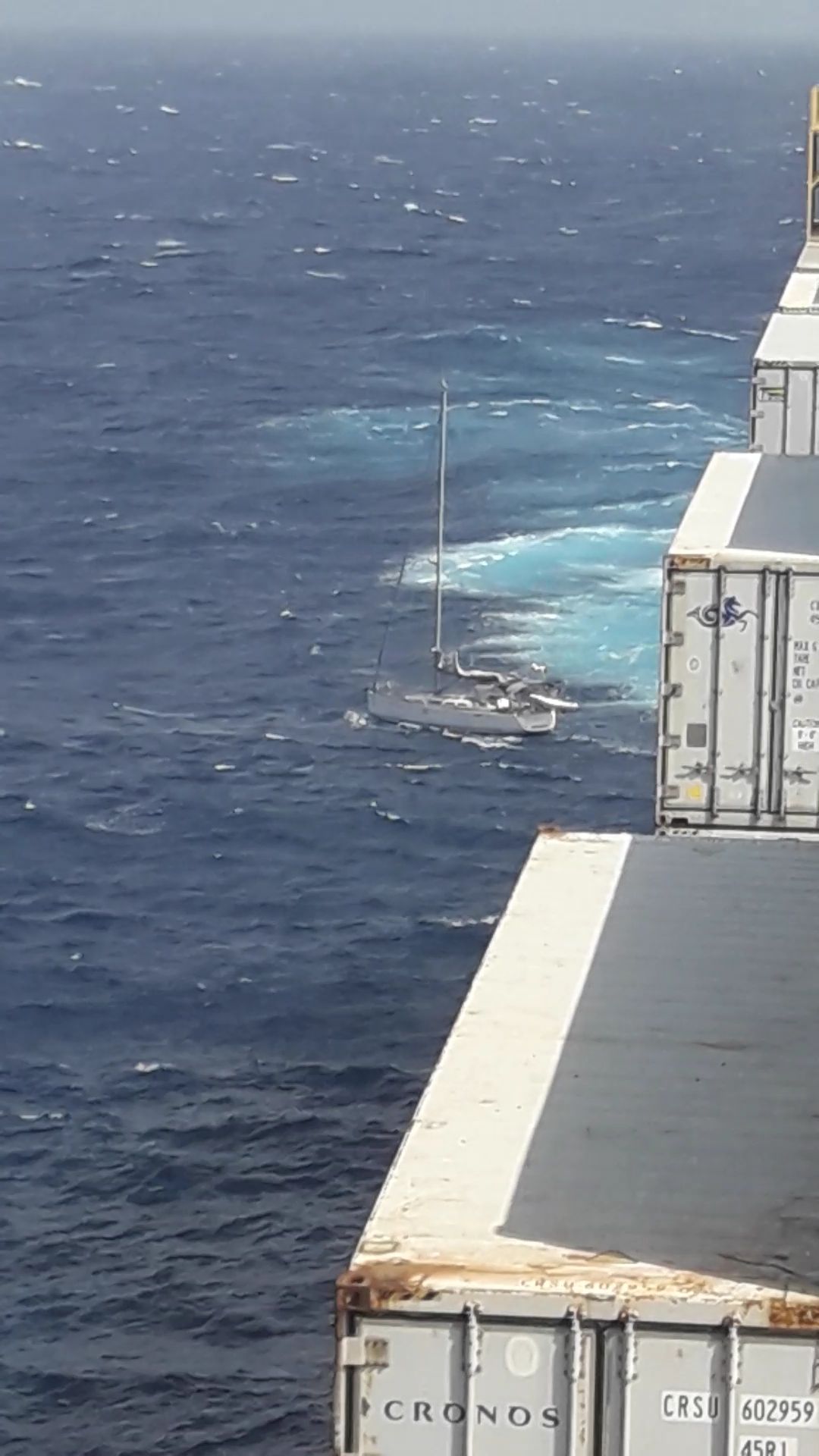
A recent example of EPIRB’s effectiveness was a yachtsman rescued by a container ship off Colombia when an EPIRB signal was picked up by the French Mission Control Centre (MCC) at Griz-Nez.
It made a satellite call to all nearby vessels and transferred the alert to MCC Colombia, which alerted nearby ships of the need for rescue.
Read more here:
https://www.rivieramm.com/news-content-hub/news-content-hub/mariners-reminded-to-test-emergency-beacons-on-406day-58824 -
2020-03-04 Container ship picks up French yachtsman off Colombia with 406 EPIRB
On 11 February 2020, the French Mission Control Center relayed a distress alert transmitted by a maritime 406 MHz EPIRB to the MRCC Gris-Nez.
After investigation, it turned out to belong to a French yachtsman alone on board his Dufour 45 sailboat.
At 140 nautical miles north of Barranquilla (Colombia), the sailor was facing bad weather conditions with a ship not maneuvering due to rudder damage.
MRCC Griz-Nez made a satellite call to all nearby vessels and transferred the alert to the MRCC Colombia.
After six hours of rallying, a container ship answering the call arrived on scene at the same time as a maritime patrol plane dispatched by the MRCC Colombia.
The sailor in distress was thus rescued safe and sound on board the container ship routing to Panama.
-
2020-02-17 Plea from New Zealand rescue survivor to register your beacon
New Zealand has one of the largest search and rescue regions in the world, and when not everyone registers their beacon it wastes time and potentially costs lives.
One of the small electronic devices saved the life of an avalanche survivor.
“You’re in sort of a bit of a washing machine and I was trying to clear my mouth of snow and we would’ve come down about 200 or 300 metres,” she says.
“I was totally buried with just my face out and I called out to the others, and [got] no reply.”
Her two guides died, but the woman survived by digging her way out and setting off her emergency locator beacon.
Without it, she would also have died.
In 2019 there were 276 beacon alerts.
Of these, 87 were real distress situations from registered beacons and 12 were from non-registered beacons.
But there were 177 falsely-activated beacon alerts – 43 from non-registered beacons.
“If the beacon’s unregistered we have no one to get in touch with to understand or start to triage the situation.”
Read more here:
https://www.newshub.co.nz/home/new-zealand/2020/02/survivor-s-plea-register-your-emergency-beacons.html