Please click to access the:
Author: kevin
-
2024-12-02 | South Africa’s latest news bulletin
South Africa’s latest news bulletin is available at https://www.transport.gov.za/?page_id=2670
Interesting articles inside address meetings and activities to support search and rescue in South Africa.
-
2024-11-19 | 406 EPIRB leads US Coast Guard to two boaters and their dog 55 miles from Florida coast
Two people and their dog were rescued after their boat stopped working over 50 miles from shore over the weekend.
The U.S. Coast Guard said the 38-foot boat stopped working 55 miles from Palm Coast.
Following a 406 beacon distress signal from an EPIRB, a Clearwater station aircraft was able to find the stranded boaters and guide water crews to their location.
-
2024-11-18 | EPIRB alert provides location for sinking fishing vessel in North Sea
The 23.1m twin-rig trawler was reportedly around 140 miles east of Montrose, Scotland, when she transmitted a distress signal requesting assistance.
All vessels in the vicinity were requested to assist in a rescue operation overseen by the Marine Rescue Co-ordination Centre.
A nearby fishing vessel responded and was able to track the 406 EPIRB distress beacon, which had been activated when ship sank.
Thankfully the vessel located the six-man crew all safe and well aboard its liferaft, and was able to transfer them safely aboard.
A fixed-wing search aircraft was deployed by HM Coastguard, and a rescue helicopter was sent to the scene from Norway.
Read more here:
https://fishingnews.co.uk/news/odyssey-sinks-in-north-sea/ -
2024-11-18 | CMCC Activity Report – October 2024
Please click to access the:
-
2024-11-08 | How did we get here?
The USA’s National Coast Guard Museum will afford visitors the opportunity to journey through the history and evolution of search and rescue (SAR), from the mission’s infancy to modern-day practices.
In the earliest days of search and rescue along the shore, “there wasn’t a way for shore-based units to communicate beyond line of sight with a vessel or person in distress.”
Things evolved toward things like the breeches buoy, developed in the mid-19th century and was essentially a life ring with a pair of pants sewn on the inside.
“It wasn’t until circa 1906 when shipboard communication became standardized and the first international radio telegraph convention adopted SOS as the international distress signal,”
“The first search and rescue satellite came online in the mid-80s,” said Ed Thiedeman, a search and rescue systems specialist at Coast Guard Headquarters.
In essence, it’s a similar technology to that of a mobile phone.
It allows for more 406 beacons to be operated simultaneously without interfering with each other, Thiedeman said.
It enables rescuers to determine a more precise location of a mariner or vessel in distress.
Read more here:
https://maritime-executive.com/editorials/the-evolution-of-modern-search-and-rescue
-
2024-10-31 | United States Coast Guard rescues boat captain clinging to cooler after Hurricane Milton in Florida
A fishing boat captain headed into the water off the Gulf Coast to make repairs on his vessel hours before Hurricane Milton slammed into Florida.
He ended up stranded in the storm, which made landfall on Wednesday night — battling waves up to 25 feet high and whipping winds of up to 90 mph.
As conditions began deteriorating with Milton’s approach, Coast Guard officials told the man to wear a life jacket and to hold onto the boat’s 406 beacon so he could be located.
Hours later, around 6:45 p.m. — about two hours before Milton made landfall some 20 miles south of John’s Pass — the agency lost contact with the captain.
“This man survived in a nightmare scenario for even the most experienced mariner.”
“He survived because of a life jacket, his [406] emergency position indicating locator beacon, and a cooler.”
Read more and see video footage here:
https://www.washingtonpost.com/weather/2024/10/11/hurricane-milton-coast-guard-rescue-man-clinging-cooler/?utm_campaign=wp_post_most&utm_medium=email&utm_source=newsletter&wpisrc=nl_most&carta-url=https%3A%2F%2Fs2.washingtonpost.com%2Fcar-ln-tr%2F3f431aa%2F67094b1887d54347a84c290f%2F59794962ae7e8a6816ecc4cb%2F24%2F56%2F67094b1887d54347a84c290f
-
2024-10-15 | CMCC activity Report – September 2024
Please click to access the:
-
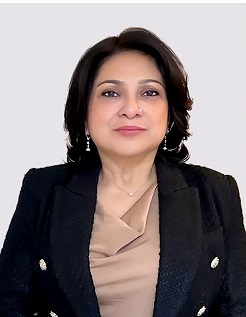
2024-09-25 | Welcome to Dr. Shefali Juneja as new HoS
The International Cospas-Sarsat Programme welcomes Dr. Shefali Juneja, former representative of India to ICAO, as the new Head of Secretariat.
She will have her inaugural meeting with the Programme at its Seventy-First Council session held in Riyadh, Saudi Arabia in October.
Dr. Shefali Juneja is a former civil service professional with over three decades of experience in aviation, finance and governance.
She represented India on the International Civil Aviation Organization (ICAO) Council from 2019 to 2023.
In this capacity, she was instrumental in securing India’s strategic position on global aviation policies and leading the nation’s delegation in international aviation forums.
She served as Vice President of the Council and Chairperson of several important committees in ICAO, spearheading work on Innovation and Global Aeronautical Distress Safety System through location information provided by COSPAS-SARSAT Programme.
Immediately prior to joining COSPAS-SARSAT, she was selected for a special position in the Government of India, Ministry of Finance, as Principal Commissioner (2023-2024), where she was responsible for national fiscal policymaking.
She has also held various senior roles within the Indian aviation sector, including being on the Board of Directors of Air India.
Dr. Shefali’s diplomatic and leadership skills have established her as a key figure in international policymaking, particularly in areas such as international cooperation, enhancement of safety through satellite communications, and technology integration for global aviation safety.
She has represented India in various international organizations, including UNWTO, UNFCCC, the EU, ASEAN, and UNCTAD.
In recognition of her contributions to the aviation sector, she has received an ‘Excellence’ award from the Ministry of Civil Aviation, Government of India.
She has a distinguished academic background with a Doctorate in history and MBA in Aviation Management, having further studied public policy and international air law at King’s College, London and McGill University, Canada, respectively.