Category: System Overview

  • 2021-05-13 | Improved web design: Cospas-Sarsat videos

    There are currently 45 videos published addressing topics including beacons, the satellite system, search and rescue, and participation in Programme meetings.

    Finding the topics of interest to you has been simplified with a redesigned video and playlist page accessible both on our website here (embedding the YouTube playlists): http://www.cospas-sarsat.int/en/search-and-rescue/programme-videos-en

    and organized into playlists on our YouTube page here: https://www.youtube.com/c/InternationalCospasSarsatProgramme#

    All videos are available in English and also have subtitled versions in French and Russian. Some videos are available with Spanish, Arabic, Greek, and Portuguese subtitles.

    Participants have found these videos to be an excellent training and public relations tool, and are freely available to all.
  • 2021-05-04 | Letter of Appreciation to RCC New Zealand

    A letter of appreciation was recently received by the New Zealand Rescue Coordination Centre (RCC) related to a successful rescue using a Cospas-Sarsat approved personal locator beacon (PLB).


    Dear Rescue Coordination Centre,

    Thank you so much for doing your part in saving my life.

    On Wednesday, 28 April 2021 I crossed Dore Pass from the Eglinton Valley.

    Route-finding was difficult due to recent snow and the state of the route marking.

    Traversing across to the Glade House descent spur I lost the route on the northernmost set of bluffs.

    Following chamois tracks, I lost my footing and slid 15 metres before self-arresting.

    I was left with a single, tiny foothold on a steep slope 25 metres above major bluffs.

    With no safe option to move in any direction, I set off my PLB.

    An hour later a helicopter got to the area and found me.

    Within 30 minutes I had been winched off the mountainside and taken to the helipad at Clinton Hut.

    The pick-up felt quick, safe, efficient and very, very comforting.

    For the first time in decades of backcountry tramping I really needed outside expert emergency help and that’s exactly what I got.

    Thank you all at RCC for being part of the chain of LandSAR people and technology that got me home safely.

    You did save my life.

    I’m really grateful and impressed by how you dealt with my PLB contact person.

    I am her husband.

    She tells me you stayed in frequent contact with her, telling her immediately of progress and relaying the latest news from the rescue helicopter.

    This was a true comfort to her and our son.

    Thank you, thank you, thank you!

  • 406 Day 2021

    Today, #406Day2021, we remind people that governments around the world have come together to locate by satellite and help rescue people anywhere from life-threatening distress. And all that is needed is for a boat owner, an aircraft owner or a remote-country explorer to purchase from any of several vendors (on-line or sporting-goods stores) any of several choices of inexpensive 406-MHz “Cospas-Sarsat” distress beacons, to be able to signal their distress. Because this is a cooperative international initiative, there are no recurring service fees. Buy the beacon (make sure that it is a “406” model), keep it with you and you have the cheapest possible insurance to call for help in a life-threatening emergency.

    We also take this day as an opportunity to celebrate the national search-and-rescue SAR teams all around the world that undertake dangerous rescues in response to distress alerts.

    Why “406 Day”? It is the 6th day of the 4th month, April, expressed as it might be in many countries: “406”. This is a reference to the 406-megahertz radio frequency that is monitored globally for signals from distress-alert beacons by the International Cospas-Sarsat Programme, a cooperative of 45 governments and agencies that helps save an average of seven lives a day, worldwide.

  • 2021-02-24 | A 406 beacon could be the difference between life and death

    A New Zealand dirt bike rider activated his 406 PLB on 8 February in the Akatarawa Forest Park near Wellington after breaking several bones in his right leg.

    He was coming around a corner at less than 15 km/h when his bike skidded on rocks and his right leg twisted out at a 45-degree angle as it caught on a rock behind him.

    He heard his leg snap as his tibia and fibula broke in two. His ankle was also broken.

    He bought his 406 beacon almost 10 years ago and has taken it on every ride, but this was the first time he used it.

    “There was no cellphone coverage where we were so my friend went up to the main track to see if he could get any coverage there. He couldn’t, but he ran into some rangers who came back with their utility vehicle. They had a radio and told us help was already on the way.”

    A paramedic was winched down but the helicopter was unable to lift Reed from the scene, so he was strapped to the back of the ranger’s utility vehicle and driven about 5 km to the nearest helipad.

    “The four to five kilometres or so strapped across the back of the utility vehicle along the rocky Karapoti trails was the most painful experience of my life,” he says.

    The bumpy journey was prolonged by frequent stops so that the paramedic could give him more pain medication.

    Read more here:
    https://www.stuff.co.nz/dominion-post/news/wellington/124334141/rescued-dirt-biker-one-of-100000-kiwis-carrying-distress-beacons 

    https://www.miragenews.com/it-could-be-difference-between-life-and-517838/ 

  • 2021-02-12 | The little 406 device that could save a life!

    At approximately 1pm on Saturday, 6 February, the Australian Maritime Safety Authority in Canberra picked up a distress signal that had been relayed by satellite from a 406 PLB that had been activated in the Crediton State Forest near Eungella, Australia.

    While en route to the location provided by the 406 beacon, police were notified that a hiker had suffered a medical emergency deep in the forest and needed urgent medical assistance.

    The Queensland Ambulance Service (QAS) joined the search and located a group of six hikers in the exact location where the 406 beacon had been activated.

    The incident highlights the life saving capabilities of 406 PLBs when adventuring or working in remote areas where there is little or no mobile phone service.

    The area in Australia has a “Get Lost” program that provides free 406 beacon rentals, a joint initiative between the police service and community partners.

    Read more here:
    https://mypolice.qld.gov.au/mackay/2021/02/09/the-little-device-that-could-save-a-life/ 

  • 2021-02-08 | Broughton Island, Australia rescue: four escape injury after boat sinks off Port Stephens

    Four men on a spear-fishing trip were rescued after their boat sank off Port Stephens and were praised for carrying safety equipment, including flares, and wearing lifejackets.

    The men had to be pulled from the water by a passing boat after their 4.8-metre vessel sank 1.5km north-east of Broughton Island about 7.20am.

    They activated a 406 EPIRB as the incident unfolded which allowed the Australian Maritime Safety Authority and the NSW Police Marine Area Command to task both the Westpac Rescue Helicopter Service and Marine Rescue Port Stephens to the site.

    They were in the water floating on coolers for about 45 minutes and it was only once they set off a fifth flare upon seeing a fishing vessel on the horizon that they were rescued.

    “It was a very successful outcome and I think there is a very good lesson to be learnt … and that’s the fact they had one of the emergency packs with them which allowed them to float away from the vessel as it sank and the pack contained everything they needed, particularly flares and an EPIRB,” the rescue unit commander said.

    Joseph Zeller, of the AMSA Response Centre, praised the group’s preparation.

    “Because the vessel owner had done all the right things – registered the EPIRB, told his emergency contact where they were going and when they were expected back home – we were able to initiate a rescue quickly, knowing what we were dealing with,” he said.

    “Setting off the flare resulted in a rescue soon after their vessel capsized, which meant that when rescue authorities arrived on scene, the four people were out of immediate danger.

    “We can’t stress enough the importance of having your safety equipment in order. This rescue is a good example of how smoothly rescue authorities and others around you can respond when you have the right equipment, it’s accessible in the event of an emergency, and you know how to use it.”

    Read more here:
    https://www.newcastleherald.com.au/story/7089316/lessons-to-be-learnt-four-men-praised-for-carrying-safety-gear-after-boat-sinks-off-hunter-coast/?cs=12 

  • 2021-02-05 | Beacon registrations rise as more New Zealanders take to outdoors

    New data compiled by Maritime NZ’s Rescue Coordination Centre NZ (RCCNZ) shows Kiwis are taking safety seriously as greater numbers head outdoors.

    RCCNZ Deputy Manager Operations, Neville Blakemore, says distress beacon registrations in December 2020 were up almost 30 percent on the previous year, with more than 2000 registered.

    The range of beacon use was demonstrated in one day recently, when RCCNZ responded to five beacon alerts encompassing – two people clinging to an up-turned dinghy; a person in a Kahurangi National Park hut who had had a medical event; a motor-cyclist who had crashed his motorcycle in the hills north of Naseby; a person who had become violently unwell on the Hump Track; and a tramper who had become isolated and disoriented on the Te Araroa Trail.

    Read more here:
    https://www.miragenews.com/beacon-registrations-rise-as-more-kiwis-take-to-507707/ 

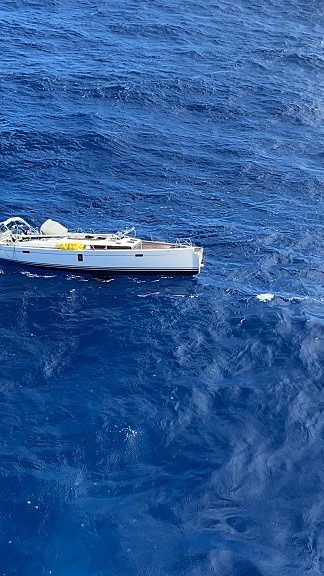
  • 2021-02-05 | MRCC Gris-Nez: Merchant vessel helps sailboat bound for West Indies

    On 28 January 2021, the MRCC Gris-Nez received a distress alert from a sailboat located about 500 nautical miles west of Cape Verde.

    The skipper confirmed his distress by satellite phone.

    Initially going to the West Indies, he tore his mainsail and tried to turn the vessel around but ran out of fuel.

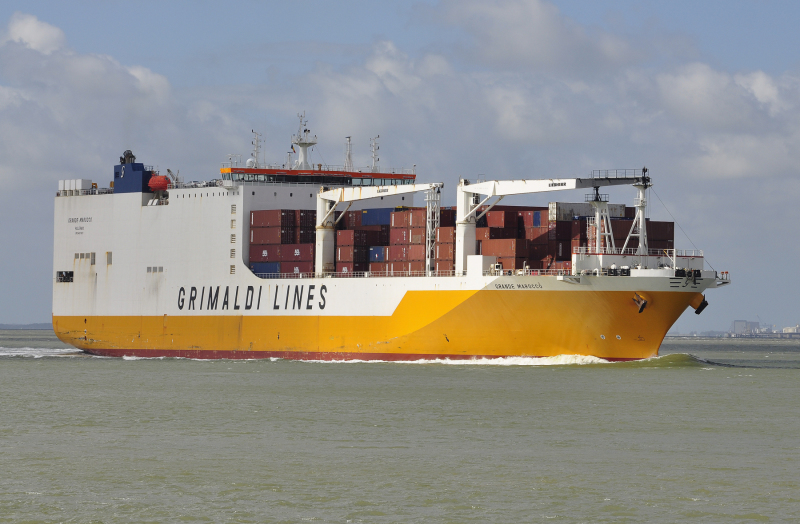
    The MRCC Gris-Nez diverted a merchant vessel bound for Dakar to assist the sailboat.

    Arriving in the area on the morning of 29 January, the merchant vessel managed to board the two people but was forced by the sea conditions to leave their sailboat adrift.

    Their arrival in Dakar was scheduled for the morning of 1 February.

    Photo: Sailboat left adrift
     
    Photo: Merchant vessel that assisted the sailboat

This site is registered on wpml.org as a development site. Switch to a production site key to remove this banner.