Category: System Overview

  • 2021-06-25 | Why carry a 406 PLB?

    An Alaskan hiker on the 13.6-mile Pioneer Peak Trail communicated with her husband and expressed concern about multiple bears nearby.

    She was then chased off the trail by bears and lost her way.

    A search was launched but lasted 35 hours with no result.

    The hiker spotted rescue helicopters but the Guard aircrews couldn’t see her.

    She had waterproof matches and was able to start a fire that night.

    “It’s easy to see and hear an aircraft in the sky but can be very challenging to spot a person at night under canopy,” the RCC superintendent said.

    “Being prepared for the unexpected is critical in the Alaskan outdoors.

    “What you plan as a day hike can quickly turn into a multiday ordeal.”

    In addition to carrying bear spray and matches, the RCC superintendent recommends brightly colored clothing, a personal locator beacon, and a satellite communications device.

    A small, portable strobe light can also help pinpoint your location, but the beacon is key.

    The hiker hiked down the mountain and emerged from the forest the next evening and waved down a ground search and rescue volunteer’s car about a mile from a trailhead.

    Read more here:
    https://www.ang.af.mil/Media/Article-Display/Article/2663958/lost-hiker-sought-by-alaska-guard-finds-her-way-to-safety/ 
  • 2021-06-23 | What is a 406 beacon and what does it cost?

    An EPIRB is an emergency position indicating radio beacon that can help search and rescue authorities pinpoint your position in an emergency.

    EPIRBs are designed for maritime use, while personal locator beacons (PLBs) are for use by an individual in a variety of environments, and emergency locator transmitters (ELTs) are installed in aircraft.

    Some 406 PLBs attach to a vest.

    406 PLBs can be handheld like a global navigation satellite system device and they typically cost around $200.

    You can buy a 406 PLB device at any outdoor shop, Marine shop, or online.

    Be sure to register your device to allow rescuers to get the best information about reaching you quickly in the event of an alert.

    Read more here:

    https://www.nbcrightnow.com/top_story/epirb-what-are-they-cost/article_b34dcf06-d296-11eb-8ffb-d7ed60db1272.html 

  • 2021-06-17 | Georgia game warden receives award following 406 PLB rescue

    The game warden has been selected to receive an award recognizing an individual for their devotion to waterfowl enforcement and for inspiring their fellow game wardens to perform at their best.

    On December 24 2020, at approximately 10:00 a.m., Game Warden Boatright received a call from Seminole County, Georgia, USA, in reference to an 406 PLB signal they had received from the middle of Lake Seminole.

    Without hesitation, he called his supervisor for assistance, then launched his patrol vessel into the high winds and pouring rain.

    He dialed in the GPS coordinates of the 406 distress signal, where he located a duck hunter in eight feet of water, clinging to the bow of his submerged vessel.

    The hunter, who was not wearing a flotation device, could barely move or talk when the officers arrived on scene.

    Game Warden Boatright immediately pulled the hunter aboard the patrol vessel and requested an ambulance to meet them at the nearest landing.

    On the way to the landing, he removed the hunter’s waterlogged chest waders, shirt, and jacket and gave him his raincoat and an emergency blanket to wear.

    During this time, the hunter shook uncontrollably and mumbled to Game Warden Boatright, “Thank you for saving my life.”

    After being checked out by emergency personnel, the hunter informed him that his decoy lines had become entangled in the prop of his motor, causing the motor to shut off.

    While trying to untangle the lines, waves began coming over his 18-foot boat, causing it to swamp and sink.

    The hunter stated that he had activated his 406 PLB just before the vessel sank.

    As a waterfowl hunter himself, Game Warden Boatright understands that bad weather conditions will not keep many duck hunters off the lake.

    His willingness to weather the extreme conditions of freezing rain, wind, and high waves to respond to an unknown emergency shows his dedication to the safety of the citizens of Georgia, along with the waterfowl hunting community.

    Game Warden Boatright gained a lot of positive notoriety with many waterfowl hunters and residents around Lake Seminole after that rescue on Christmas Eve.

    Read more here:
    https://m.thepostsearchlight.com/2021/06/16/local-game-warden-receives-award/ 

  • 2021-06-11 | New Questacon – National Science and Technology Centre exhibition in Australia recognizes significance of satellite technology in search and rescue

    Questacon’s latest exhibition, Australia in Space, celebrates Australia’s contributions to the space industry. The exhibition aims to educate and inspire new generations to explore the technology that enables us to travel to outer space and plan space operations.

    A component of the exhibition focuses on the use of satellite technology in space exploration, an area in which Australia has been notably involved (see Australia and the first Moon landing). This provided an exciting opportunity for AMSA to showcase distress beacon technology and how we use satellite technology to help with search and rescue.

    Linda Berryman, Advisor Response Systems, was invited to contribute to the exhibition through her role at AMSA as a technical and policy advisor for distress alerting devices. In this role, Linda is responsible for managing Australia’s distress beacon register and overseeing the Australian standard for emergency position indicating radio beacons (EPIRBs), personal locator beacons (PLBs) and man overboard devices.

    Linda says of her career: “I am very passionate and thoroughly enjoy my work helping stakeholders understand how distress alerting devices function. I’m also looking forward to contributing to the evolution of distress alerting devices.”

    Asked what she is most excited about people seeing at the exhibition, Linda said: “The exhibition is fantastic and I recommend it to everyone, particularly children. It is an educational and interactive exhibition showcasing space, satellites and innovative technology using satellites. The interactive displays are so much fun, and you can take a selfie flying through space!”

    The recently opened Australian Space Discovery Centre in Adelaide also has a twin display of Questacon’s Australia in Space exhibition.

    The Australia in Space exhibition is available for all general admission ticket holders in Canberra until early 2022 and will then travel around Australia over the next five years.

    See also:
    https://www.questacon.edu.au/visiting/galleries/australia-in-space 
    https://www.industry.gov.au/australian-space-discovery-centre 
    https://www.industry.gov.au/news/australia-and-the-first-moon-landing 

  • 2021-06-10 | 406 beacon helps French Alpine solo walker

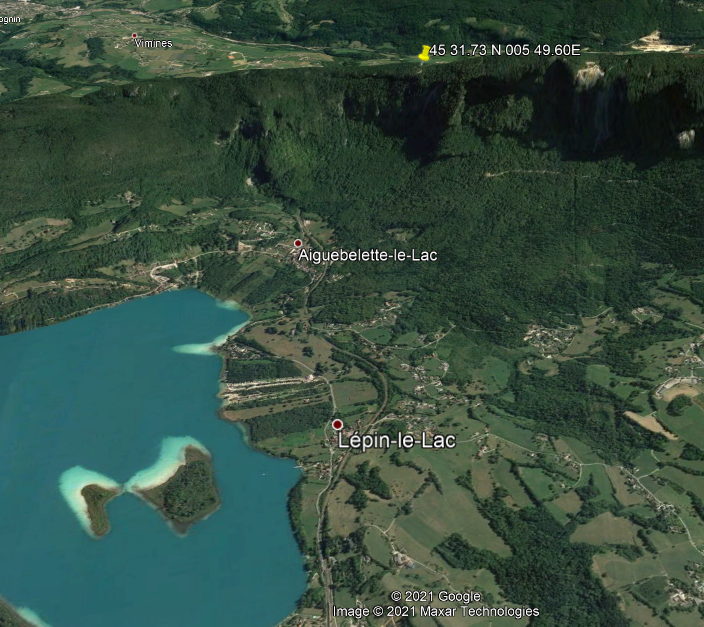
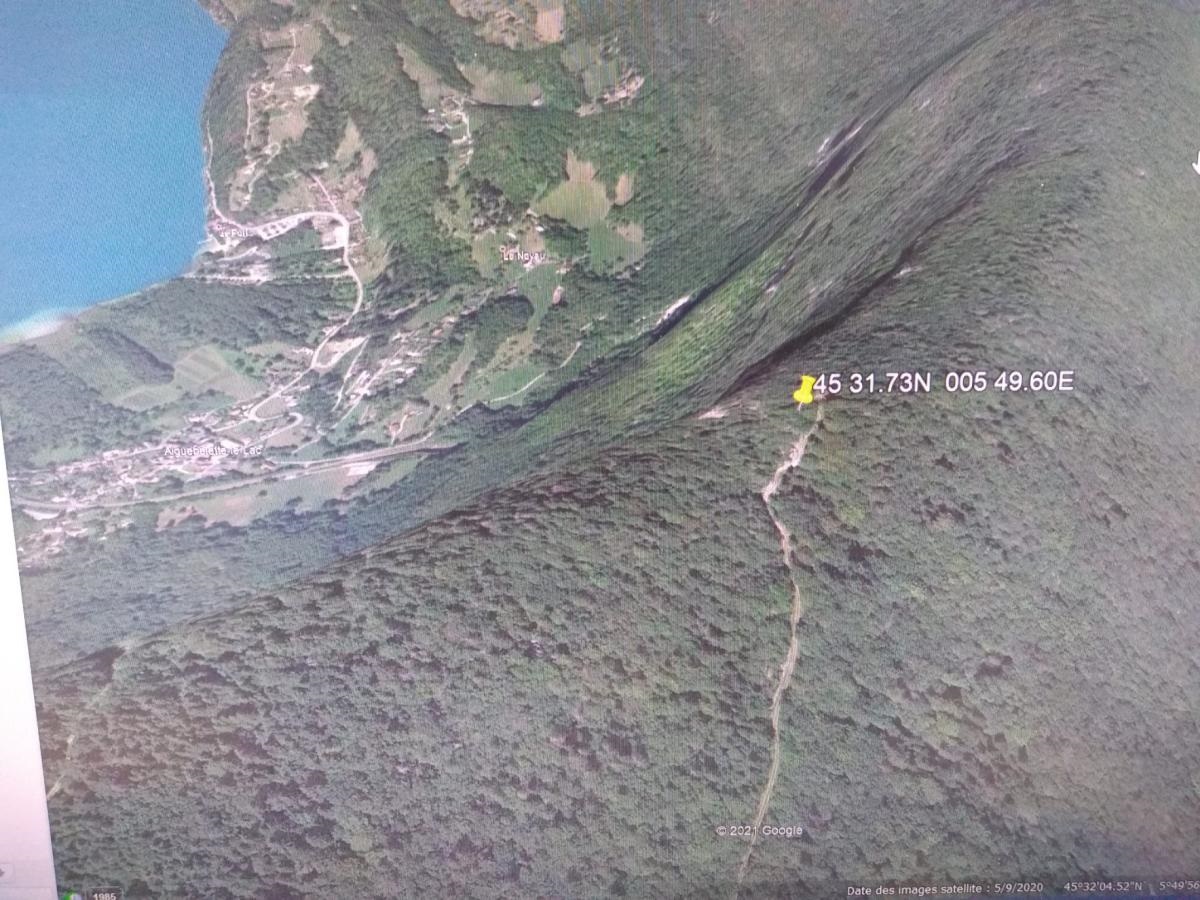
    A lone senior hiker went for a walk above Aiguebelette Lake in the French Alps on 27 May 2021, and used his cell phone to determine his location when he wandered away from the trail.

    On his way back toward the trail he slipped and fell, and was knocked unconscious when his head hit the ground.

    He regained consciousness shortly thereafter, but his phone had been lost when he slipped.

    Fortunately, he still had his 406 personal locator beacon with him, which had been registered in the French Registry.

    He set off his 406 PLB, which was quickly identified, and the MEOSAR data was rapidly transmitted to the ARCC Lyon (French Air Force) in charge of terrestrial beacon alerts.

    Unfortunately, the emergency contact information was out-of-date, and the aeronautical details were for a 406 PLB with multiple uses, making it more challenging for rescuers to determine the nature of the emergency.

    Time was spent checking information extracted from the French Beacon Registry and to confirm whether it was an aeronautical or a terrestrial SAR operation.

    Because of the mountainous and forested terrain, the helicopters dispatched were not able to receive the 121.5 MHz homing signal being transmitted by the beacon.

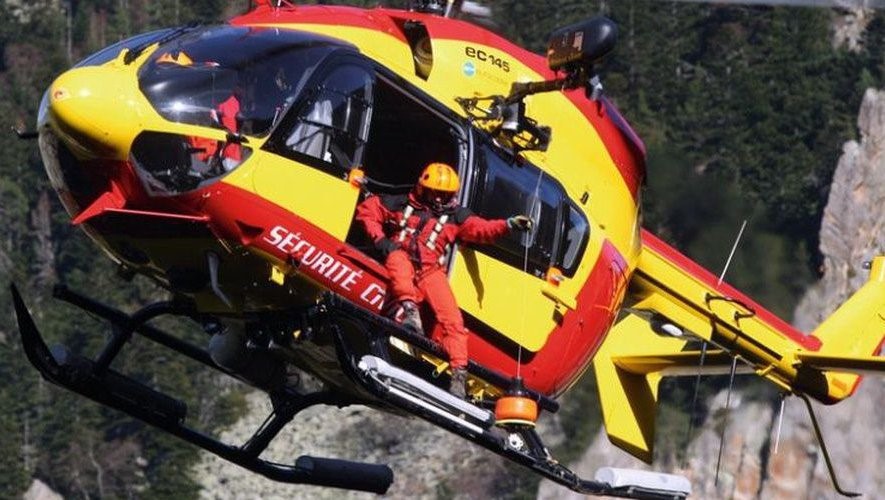
    However, with the location data sent by the FMCC plus information from a witness, the Sécurité Civile Helicopter managed to identify the site and a rescue team was airlifted at 17:50 UTC.

    The man was then transferred to the nearest hospital in Chambéry with his 406 beacon.

    Leaving the hospital safe and sound later that evening, triggered beacon still emitting, he went home to rest.

    The hospital’s thick walls had been blocking the 406 beacon’s transmission, but once back outside, the beacon was again sending alerts to the Cospas-Sarsat System.

    There was no “Off” button on the 406 PLB, and the hiker had no information on how to stop it from transmitting.

    After some rest following his ordeal, the beacon was finally deactivated the next morning when police officers, sent by ARCC Lyon, came knocking on his door to get him to turn off the signal!

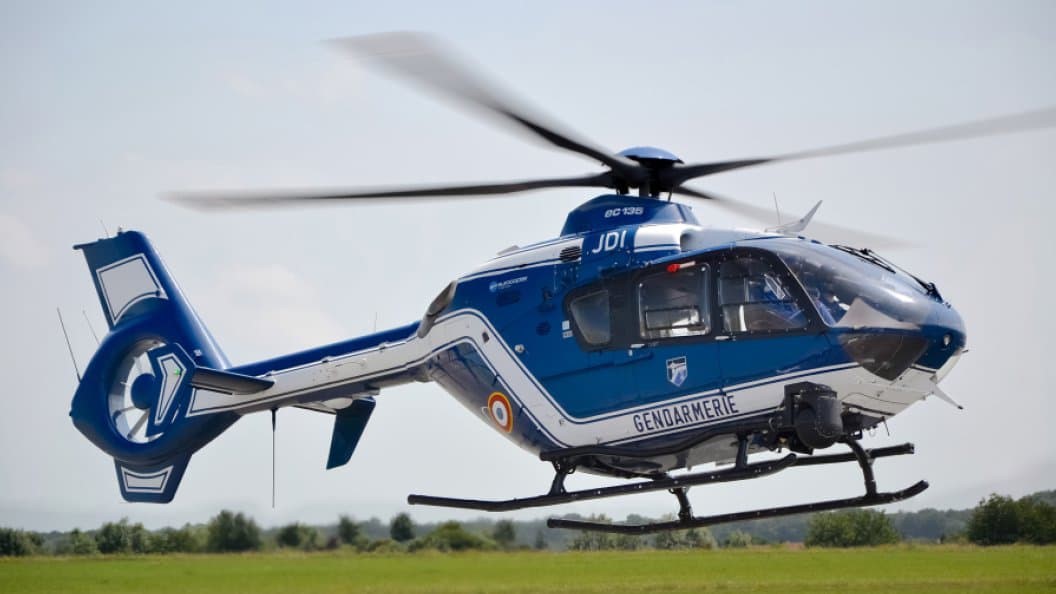
    Photo 1

    Photo 2

    Photo 3

    Photo 4

  • 2021-06-10 | New Zealand Kayaker rescued in Cook Strait with 406 beacon and smoke flare

    An exhausted but well prepared kayaker crossing the Cook Strait triggered a 406 distress beacon before his strength failed him.

    His beacon activated a rescue helicopter, which spotted him via his smoke flare and hovered above him until he was pulled aboard a rescue vessel.

    In addition to the 406 distress beacon, the exhausted and overwhelmed kayaker was well prepared with life jacket, VHF radio and a red smoke flare.

    “Being well equipped can really take the search out of search and rescue.”

    Four other vessels in the area, including a ferry, offered assistance after the 406 alert was raised.

    Read more here:
    https://www.nzherald.co.nz/nz/kayaker-crossing-cook-strait-saved-by-smoke-flare-sparking-rescue/A37VPEADOFWD3W2YWK5JAGQOGM/ 

  • 2021-06-09 | Discarded 406 beacon sends rescuers to the dump

    A 406 EPIRB began transmitting an emergency signal from a garbage dump in Eurobodalla, Australia, that would have continued for 48 hours.

    A rescue helicopter was called to the area, tying up valuable resources.

    Workers at the dump had to dig through tons of trash to find the beacon carelessly discarded.

    “Unwanted distress beacons should never be put into household bins.”

    “Not only can they activate and waste valuable emergency resources, but the beacon batteries are also hazardous and should be disposed of in an environmentally-friendly way.”

    New South Wales Maritime holds regular collection events in Eurobodalla for expired flares, where unwanted emergency beacons can also be safety disposed of free of charge.

    The next collection is likely to be held in November.

    If residents can’t attend a collection event, batteries should be disconnected in accordance with the manufacturer’s instructions and disposed of at Council’s waste facilities for free.

    Read more here:
    https://www.miragenews.com/discarded-beacon-signals-rubbish-emergency-561924/ 

  • 2021-05-17 | How to Survive a Boating Emergency – four stories

    Four different search and rescue stories provide valuable lessons on how to respond in an emergency with examples using a PLB, a life jacket a coast guard call, and a towing service.

    In the Cape Canaveral, Florida story, the hatch of the 20-foot center-console revealed submerged batteries, and the sailor, who had a friend and two young sons aboard, knew that he needed to act fast.

    He quickly went to the helm, flipped on the bilge pumps, and tried to turn the boat to put it on plane, but it took water over the bow.

    His friend rushed to the bow and grabbed life jackets for all four passengers while the boater put out a mayday call over his VHF.

    A nearby boater responded, but he read back their latitude and longitude numbers and left one digit off.

    “It all happened extremely fast,” the boater recalls.

    “From the time we realized we were taking on water, it took maybe 10 minutes.”

    Fearing the children would get trapped under the boat if it rolled, they decided to leave the vessel, grabbing the kids and a 406 PLB.

    After about 15 minutes, they realized they hadn’t activated the PLB, so they finally engaged it.

    Since they were in a popular fishing area, they shot off the flares in hopes nearby boats would see them.

    Unfortunately, none did.

    They floated for two hours, worried they might never be found.

    Fortunately, the 406 PLB did what it was supposed to do—it sent an emergency call via satellite uplink on a 406 MHz frequency to the US Coast Guard with GPS coordinates of the crew.

    Within two hours, they caught sight of a Coast Guard HC-144 Ocean Sentry search plane homing in on their PLB transmission, and they knew help was on the way.

    “Hands-down, the PLB was our saving grace,” the boater says of his ultimate rescue by the Coast Guard.

    “It’s the reason my family and friend are still here.”

    Read more here (includes three more SAR stories):
    https://www.boatingmag.com/story/how-to/how-to-survive-a-boating-emergency/ 

This site is registered on wpml.org as a development site. Switch to a production site key to remove this banner.