Category: System Overview

  • 2019-08-21 Items that could save your life if you are lost at sea

    If something goes wrong, there are a number of items that can help searchers and rescuers find you and come to your aid.

    Personal flotation devices, visual distress signals and sound producing devices, in addition to an emergency beacon (EPIRB) registered to your vessel with updated trip information that will be available to search and rescue teams are some of the key items to prepare for an emergency situation.

    Keeping a personal locator beacon (PLB) registered to an individual can also be the difference between life and death.

    According to NOAA, PLBs helped save the lives of 122 individuals in the USA in 2016 alone.

    Unlike EPIRBS, PLBs are devices that you carry, and they can only be activated by hand.

    Once activated, they send out distress signals to help rescuers pinpoint your location.

    As with EPIRBs, registering your PLB is key.

    Even though a float plan isn’t necessary for an afternoon on the water, the US Coast Guard suggests telling someone where you’re going and when you are due back.

    But when it comes to lengthier boat trips, it’s recommended that you make a written float plan, including a description of your boat, an inventory of the people and safety equipment on board, your location and your expected time of arrival.

    Give a copy of the float plan to a loved one and keep them updated on your progress throughout the trip.

    Read more here:
    https://www.sarsat.noaa.gov/emerbcns.html 
    USA beacon registration: https://www.sarsat.noaa.gov/emerbcns.html
    International Beacon Registration Database (IBRD): http://www.cospas-sarsat.int/en/774-registering-your-beacon
    USA Coast Guard guide to boating safety: https://www.uscgboating.org/assets/1/AssetManager/Boaters-Guide-to-Federal-Requirments-for-Recreational-Boats.pdf 
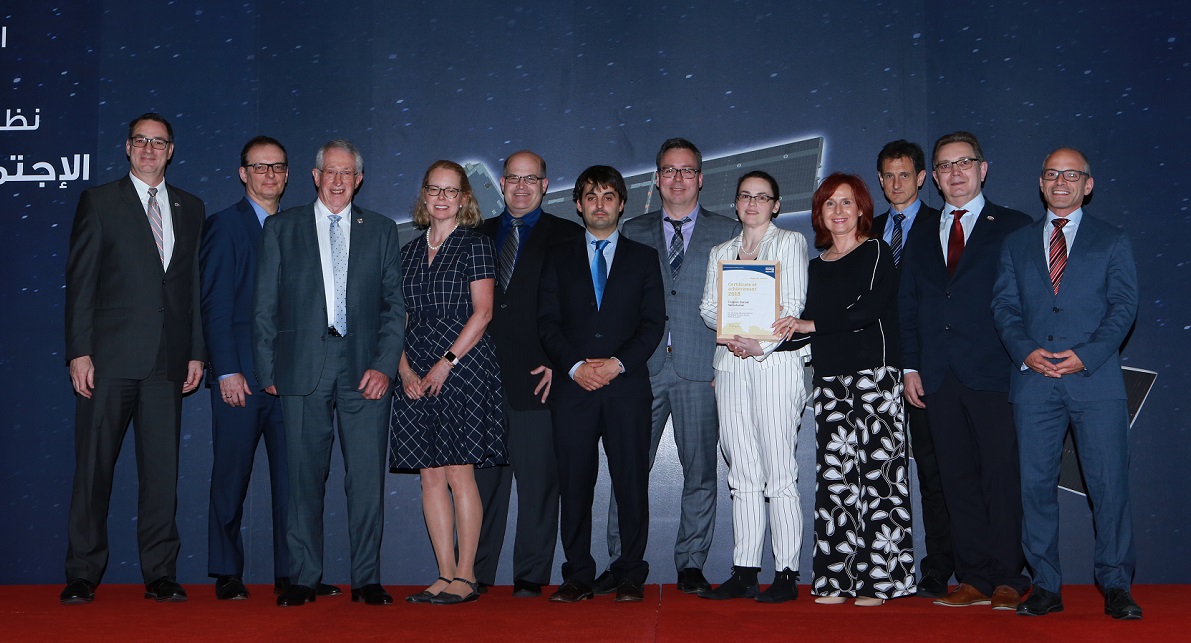
  • 2019-08-19 NZ SAR Council awards 2018 Certificate of achievement

    The Cospas-Sarsat Secretariat was recognized by the New Zealand Search and Rescue Council with its 2018 Certificate of achievement.

    It was awarded for an important contribution to international search and rescue by ensuring the provision of the global Cospas-Sarsat distress system.

    “We have the special honor of working together among the dedicated individuals of the Secretariat’s international staff who support the member States in their cooperative humanitarian endeavor to save lives.

    “This award is especially welcomed, coming from New Zealand, the country with the largest number of rescues per capita that are assisted by Cospas-Sarsat.

    “This is what Cospas-Sarsat is all about: countries helping other countries at the same time they are helping their own citizens.”

    Photo


  • 2019-08-13 Sharing the Arctic – a handshake in space

    Improvements in Arctic broadband communication are under way.

    This article highlights the many ways that countries co-operate and coordinate in the cold, dark, and dangerous Arctic region.

    Cold war co-operation extended to helping revive polar bear populations, but also, “Satellite-based search and rescue exists only because of a remarkable exercise in Cold War co-operation.

    “In 1979, Canada, France, the United States and the Soviet Union created Cospas-Sarsat, which pools the capabilities of dozens of satellites and ground stations.

    “The first rescue took place in northern British Columbia in 1982, just weeks after the first satellite in the system, COSPAS-1, was launched by the Soviet Union.”

    Space exploration is remarkably international, even resulting in a famous handshake in space.

    Remoteness and extreme conditions contribute to sharing the financial and human risk in co-operative efforts such as search and rescue, emergency response, and Arctic ice-breaking.

    “When a South Korean fishing trawler sank on the Russian side of the Bering Sea in December, 2014, Russian officials requested assistance from the U.S. Coast Guard, which immediately sent two ships and an aircraft.”

    “The countries that contribute satellites and ground stations to Cospas-Sarsat obtain greater coverage and therefore faster notifications of distress signals than they could ever obtain on their own, given the high costs of building and launching satellites.”

    Read more here:
    https://www.theglobeandmail.com/opinion/article-cold-dark-and-dangerous-the-connection-between-the-arctic-and-outer/ 

  • 2019-08-13 406 PLBs to help rescue stranded fishermen

    The USA’s National Institute for Occupational Safety and Health note the push for fishermen to wear personal locator beacons while at sea.

    Beacon registration is free and there are no monthly fees associated.

    406 PLBs transmit alerts through the Cospas-Sarsat System to mission control centres and then rescues are coordinated in rescue coordination centres.

    Studies show that the greatest dangers to fishermen are vessel disasters, falls overboard, and machinery on deck.

    Commercial fishing ranks among the most dangerous professions, according to the NIOSH.

    Between 2000 and 2013, more than 660 American fishermen died at sea, of whom nearly one-third fell overboard.

    Read more here:
    https://sunnewsreport.com/locator-device-could-help-rescue-stranded-fishermen/ 

  • 2019-08-13 Russia unveils project for innovative laser “gas” station in space

    Using solar or photovoltaic cells for recharging is something we see more and more often in solar panels like those on roofs.

    The planned spacecraft that will benefit from the Russian “gas” (i.e., laser) station in orbit are spherical, with solar panels and photovoltaic modules.

    The solar panels will be charged by the sun, and the photovoltaic modules will be topped up by robotic structures fitted with batteries and pulse chargers based on a supercapacitor.

    The robotic group will be tasked with ensuring the smooth operation of the small spacecraft belonging to the international search and rescue system Cospas-Sarsat, as well as satellite transponders for Internet, video and radio communications.

    Read more here:
    https://sputniknews.com/russia/201908061076482448-russia-unveils-ambitious-project-for-laser-recharging-of-satellites-in-orbit-/ 

  • 2019-08-05 Certified 406 ELT info from EASA’s Sunny Swift publication

    Issue 14 of general aviation EASA publication Sunny Swift, available in 20 languages, talks about the benefits of certified ELTs that are registered and encoded with GNSS positions.

    Document EASA SIB 2019-09 has also been published on ELT and PLB annual testing.

    EASA provides links in Issue 14 to information about the Cospas-Sarsat System, ELT installation and maintenance, operational rules, and more.

    Read more here:
    https://www.easa.europa.eu/newsroom-and-events/news/sunny-swift-emergency-locator-transmitters#group-easa-downloads 

  • 2019-07-16 Australian fisherman rescued just hours after activating 406 beacon

    The man set off his beacon when his boat split down the centre and became swamped in the shallow water in a remote location without land access north of mainland Northern Territory.

    A helicopter was deployed to the scene, landing on a beach near the man and his boat.

    “Today’s [fast and collaborative] rescue illustrates how effective [Australia’s SAR systems and equipment] are, and how efficient they can be when safety equipment is carried and activated appropriately.”

    Read more here:
    https://www.mix1049.com.au/news/local-news/88278-fisherman-rescued-off-melville-island 

  • 2019-07-15 3 Hikers airlifted out of Colorado wilderness after using 406 beacon to raise alarm

    Three women were out for a five-day hike and were forced to cut their trip short when one of the three, a 24-year-old woman, suffered a leg injury.

    They set off their beacon and rescuers contacted their families (the registered emergency point of contact for the beacon), who confirmed that these were experienced hikers and this was most likely a real distress.

    The rescue involved 18 volunteers and a number of rescue organizations.

    First the injured woman was airlifted out and brought to hospital by a two-person helicopter team, and they then returned for the others.

    The sheriff’s office reminds hikers to be prepared with gear and provisions and to understand the conditions of the area.

    Read more here:
    https://snowbrains.com/hikers-rescued-aspen-beacon-raise-alarm/ 

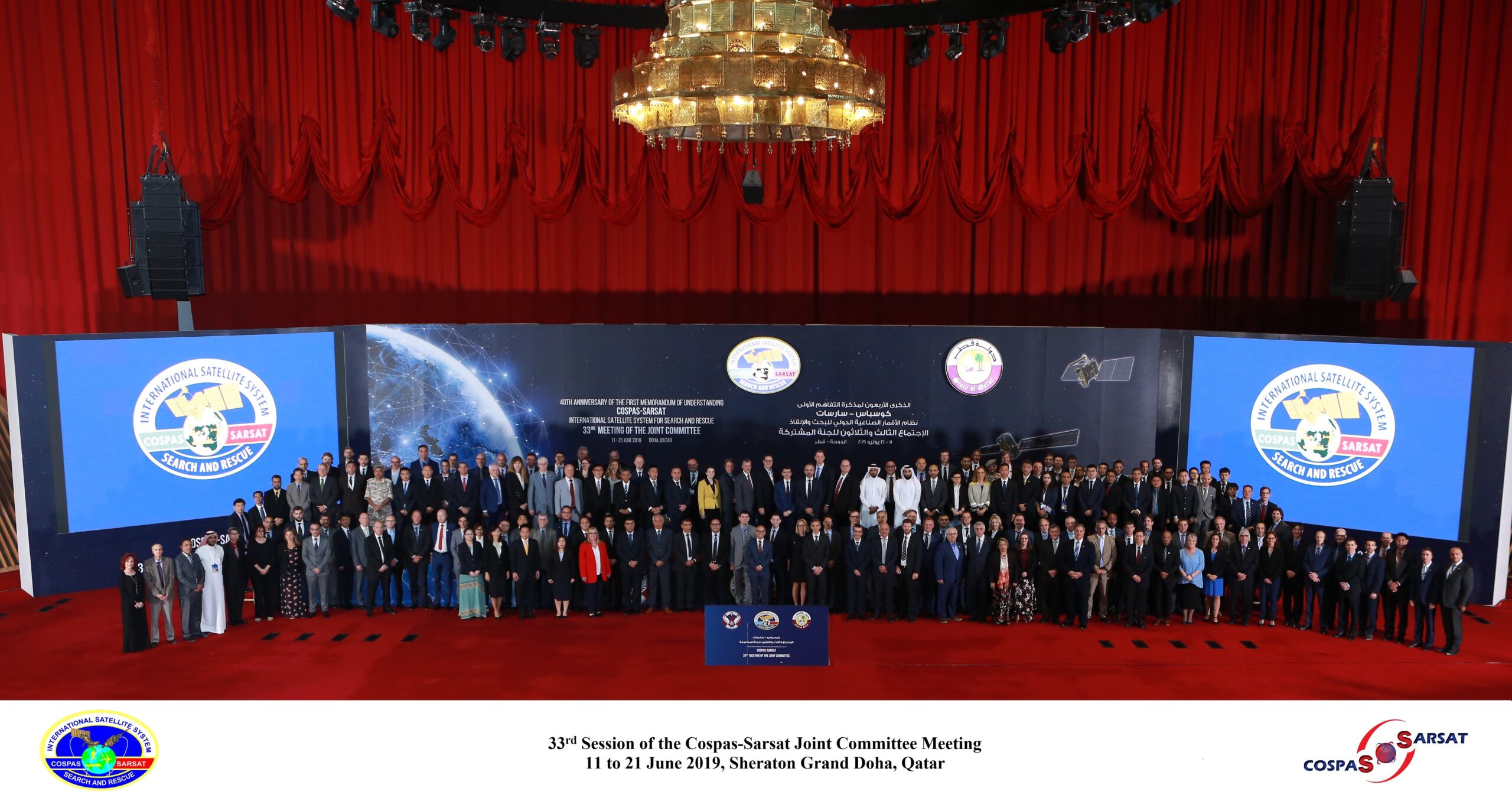
  • 2019-07-11 33rd Joint Committee Meeting

    The State of Qatar hosted the 33rd Joint Committee Meeting in Doha chaired by Mr. Didier Delcuvellerie from France. The OWG and TWG were chaired by Mr. Allan Knox and Mr. Anthony Foster from the USA.

    The meeting was attended by 176 people, and included delegates from the four Cospas-Sarsat Parties, thirty-five Participant countries, four Observer organisations, and members of the Secretariat.

    Photo

This site is registered on wpml.org as a development site. Switch to a production site key to remove this banner.