Author: kevin

  • 2017-07-27 Capsized Irish and Canadian rowers rescued in Atlantic crossing thanks to EPIRB

    En route from St. John’s Newfoundland, Canada to France, the two were forced to shorten their trip and aim for the Irish coast.

    250 k out, rough seas flipped their boat and the EPIRB disappeared, but was activated.

    “That’s what saved our lives, to be honest. Without the EPIRB, we wouldn’t be here today. We’d still be on the boat.”

    Read more here:
    http://www.cbc.ca/news/canada/newfoundland-labrador/brian-conville-joseph-gagnon-rowers-1.4218706 

  • 2017-07-26 Fishermen dive for EPIRB after hours in freezing water

    Two fishermen struggled in the dark for four and a half hours before deciding to try retrieving their EPIRB from the overturned boat.

    There had been warnings to stay out of the water due to rough conditions, and the men were not wearing their lifejackets.

    Within 45 minutes, an ambulance helicopter spotted the pair and treated them for hypothermia.

    Read more here:
    http://www.smh.com.au/nsw/two-men-rescued-after-boat-capsizes-off-cronulla-20170722-gxgrdf.html?csp=0f0be3250a8d97ce8e6eb05de10414fb 

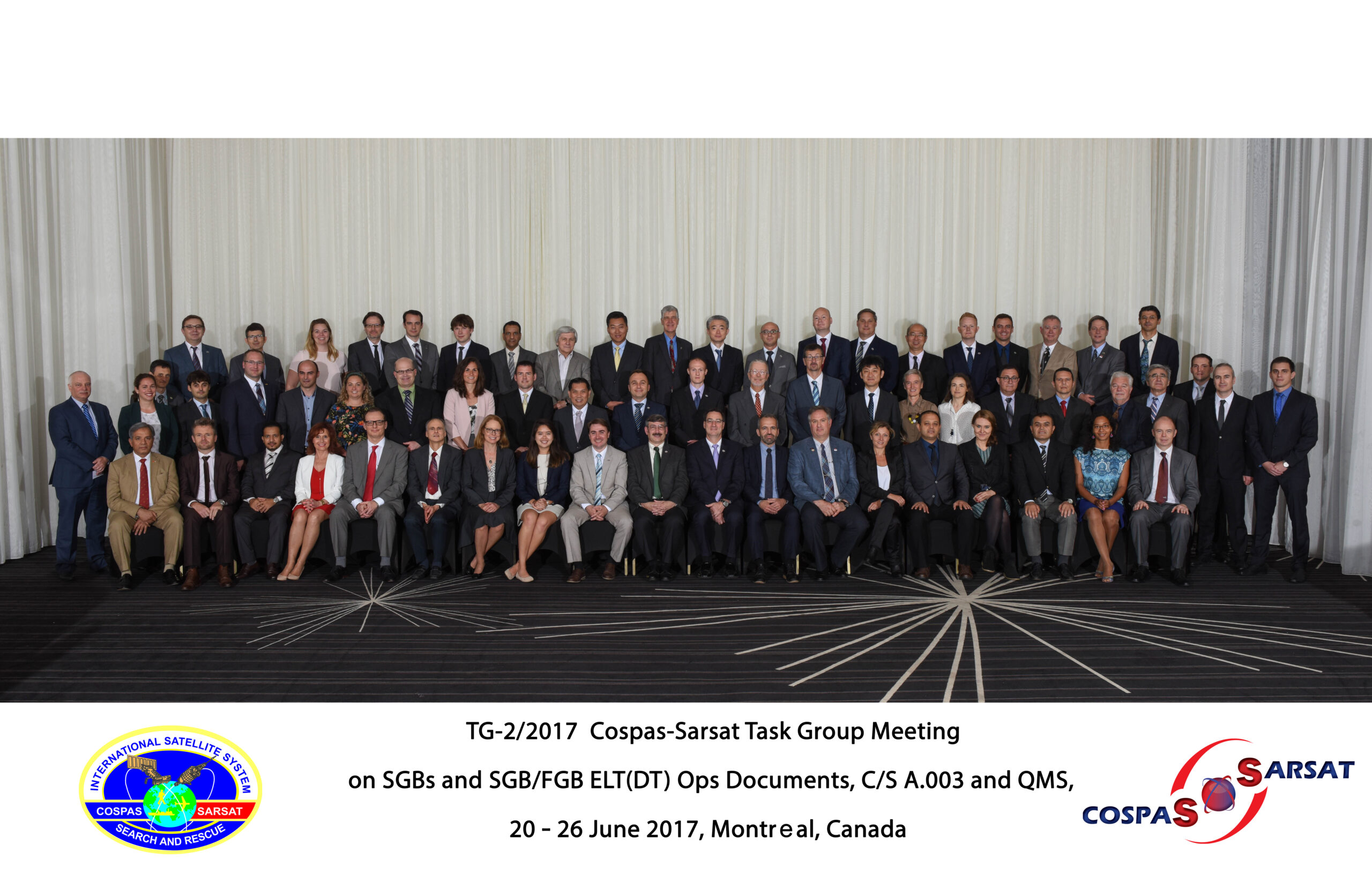
  • 2017-07-10 Task Group Meeting on SGB and SGB/FGB ELT(DT) Operational Documents, C/S A.003, QMS

    The 2017 Task Group Meeting on Second-Generation Beacons (SGB) and SGB/FGB ELT(DT) Development Of Operational Documents, Development of C/S A.003 (System Monitoring and Reporting), and QMS was held in Montréal, Canada from 20 to 26 June 2017.

    Mr. Edwin Thiedeman (USA) chaired the meeting.

    69 people, including members of 15 Cospas-Sarsat Participants, 2 Observer Organizations and the Secretariat took part in the meeting.

    Photo

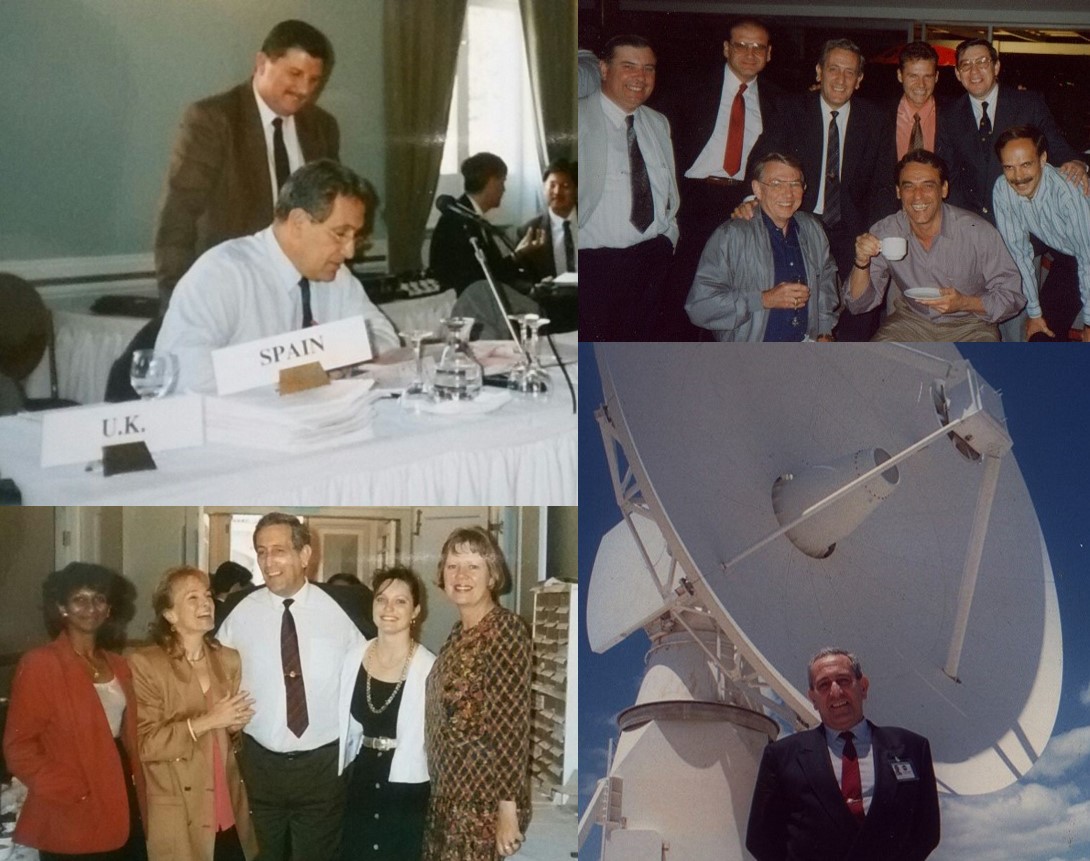
  • 2017-07-10 Spain’s Mission Control Centre celebrates 25th Anniversary with Cospas-Sarsat

    25 years ago, on 7 July 1992, Spain deposited its letter of Notification of Association with the International Cospas-Sarsat Programme as a Ground Segment Provider.

    The National Institute of Aerospace Technology (INTA) was designated as the official organisation responsible for fulfilling the commitments, and INTA’s Maspalomas Satellite Tracking Station as the site for the Local User Terminal (LUT) and the Spanish Mission Control Centre (SPMCC).

    At the time, Colonel Julio Melián was the Maspalomas Station Director and key architect of this association.

    Please join us in congratulating Spain on 25 successful years of service to international search and rescue!

    Collage Julio Melián

  • 2017-07-04 Florida offers discounts to boaters that equip with distress beacons

    After several high-profile fatal incidents where boaters lives likely would have been saved with a low-cost emergency position-indicating radio beacon (EPIRB) or personal locator beacon (PLB), Florida in May passed HB711 into law with unanimous approval from the Florida House and Senate. The goal of the bill is to encourage boaters to have a device on board which can help the Coast Guard and other search-and-rescue authorities locate boaters in distress. The “Beacon Bill” offers Florida boat owners a discount between 15 and 30 percent on their vessel registration if they have a registered EPIRB or PLB. The beacon must be a Cospas-Sarsat-approved 406-MHz type of beacon. (Use the search terms “406 EPIRB” and “406 PLB”.) The law is permanent and will not need to be renewed.

    Read more here:
    http://www.injupiter.com/jupiter-florida-stories/in-honor-austinblu-foundation/140 

  • 2017-06-30 Cospas-1 35th Anniversary

    35 years ago on 30 June 1982 the first Cospas-Sarsat LEOSAR satellite was launched (Cospas-1).

    So far about 44,000 persons have been rescued using Cospas-Sarsat alert data.

    Cospas-1

  • C/S S.007 – UKM

    02 June 2017

    UNITED KINGDOM

    1.         REGULATIONS

    1.1       EPIRBs

    The United Kingdom require the mandatory fitting of 406 MHz on all SOLAS vessels, fishing vessels of 15 metres or more in length and vessels under the Large Commercial Yacht code. The voluntary fitting of 406 MHz EPIRBs on non-SOLAS and pleasure vessels is actively encouraged.

    The United Kingdom’s legislation Statutory Instrument 2000 No 1850 – Merchant Shipping (EPIRB Registration) Regulations 2000, requires the compulsory registration of all 406 MHz EPIRBs carried on UK vessels.

    The UK Distress & Security Beacon Registry is located at CGOC Falmouth and is responsible for the registration of UK encoded EPIRBs. Upon successful registration, the beacon owner is issued with a copy of the database entry and two “proof of registration labels”. ELTs

    Regulations introduced within Europe and also by the UK CAA require 406 MHz ELTs to be registered on the UK Distress & Security Beacon Registry.  The CAA regulations also specify that the UK country code of 232 to be used and details the acceptable coding protocol options.

    On 4 October 2012, the UK CAA, National Air Traffic Services, issued a new Air Information Circular, AIC P 134/2012 replacing AIC 57/2003 (Pink 55), (available from: http://www.nats-uk.ead-it.com/public/index.php.html) which provides guidance to the aeronautical community on the coding and registration of UK-coded ELTs.

    The UK has filed a Notification of Difference with ICAO to ICAO Annex 10, Volume III, Part 2, Chapter 5, Paragraph 2.3, Sub-paragraph 2.3.3, which specifies the setting of bit 26 in the digital message transmitted by an ELT.

    1.2       PLBs

    The Licensing authority (OFCOM) has agreed that PLBs are licence exempt in the UK for use in maritime, aviation and overland environments as long as the vessel or aircraft that they are carried onboard has a radio licence.  All UK encoded PLBs are to be registered on the UK Distress & Security Beacon Registry.

    1.2.1    National Beacon Regulations for Serial-Coded PLBs


    Country / Territory Country recognizes PLB Activations
    For terrestrial applications In maritime environment On aircraft
    TBD Y Y Y
    Comments Nil. Nil. Nil.


    Similar information is avalable in the new table on the Cospas-Sarsat website (www.cospas-sarsat.int) with the status indication in colours (Y = green, allows / N = red, not allowed / Restrictions = amber (see comments) and with the note that the national beacon regulations can be found on the Cospas-Sarsat website in document C/S S.007).

    1.3       Other beacons

    For information relating to the registration of Ship Security Alert System (SSAS) beacons and Simplified-Voyage Data Recorder (S-VDR) beacons please contact the UK Distress & Security Beacon Registry, Tel: +44 (0) 20 3817 2006.

    1.4       Return Link Service (RLS) Protocol Beacons

    A registration database for RLS beacons and the assignment of serial numbers for these beacons is:


    Provided by the National Administration Provided by the Cospas-Sarsat Secretariat
    Y Y


    2.         BEACONS CODING METHODS

    2.1       EPIRB Coding Methods


    Country Code (1) USER PROTOCOLS LOCATION PROTOCOLS
    Maritime User Serial User Radio Call Sign User Location Standard Location National Location Serial Number RLS (Return Link Service) Location Protocol
    MMSI Radio Call Sign EPIRB with Serial Number Radio Call Sign MMSI EPIRB with Serial Number Radio Call Sign MMSI Serial Number Assigned by Competent Administration Assigned by Competent Administration
    232
    233
    234
    235
    Y N Y N Y Y N Y Y Y Y


    Note 1: MIDs 232, 233, 234, and 235 are allowed, in order to match the encoded MMSI as necessary.

    2.2       ELT Coding Methods


    text centered


    Country Code USER PROTOCOLS LOCATION PROTOCOLS

                Serial User       Aviation User  User Location Standard Location      National Location

    Serial Number RLS (Return Link Service)

    Location Protocol

                ELT with Serial Number         Aircraft Operator Designator and Serial Number       Aircraft 24-bit Address           Aircraft Nationality and Registration Marking          ELT with Serial Number         Assigned by Competent Adminis-tration    Aircraft 24-bit Address          Aircraft Nationality and Registration Marking            ELT with Serial Number         Aircraft Operator Designator and Serial Number       Aircraft 24-bit Address           Assigned by Competent Adminis-tration

                Assigned by Competent Adminis-tration

    232      Y         Y         Y         Y         N         N         N         N         Y         Y         Y         Y         Y

    2.3       PLB Coding Methods

    Country Code USER PROTOCOLS LOCATION PROTOCOLS

                Serial User       User Location Standard Location      National Location

    Serial Number             RLS (Return Link Service)

    Location Protocol

                PLB with Serial Number        PLB with Serial Number        Assigned by Competent Administration            Assigned by Competent Administration

    232      Y         Y         Y         Y

    3.         LIST OF BEACON MODELS TYPE APPROVED BY UNITED KINGDOM

    Not available.

    4.         BEACON TESTING REGULATION

    Not available.

    5.         POINT OF CONTACT FOR BEACON MATTERS (CODING, REGISTRATION AND TYPE APPROVAL)

    The point of contact for all administrations are available at https://www.cospas-sarsat.int/en/contacts-pro/contacts-details-all.

    6.         BEACON REGISTRATION FORMS

    Online beacon registration forms are available at: www.gov.uk/406beacon (EPIRBs, PLBs and ELTs (maritime / aviation / overland use).

    Please note this does not currently provide direct customer access to the UK database.
  • 2017-05-30 South Dakota Cadets support SAR crews and gain valuable life experience

    Two Cadets working with Civil Air Patrol SAR volunteers were part of a team responding to two back-to-back ELT alerts near Watertown, South Dakota.

    “Two ELTs active at the same time within 40 miles of each other is an extremely rare occurrence”, the incident commander said.

    “The [Civil Air Patrol] Cadet Program accepts children at age 12, and it has members of all ages, from all walks of life, and you don’t have to be a pilot.”

    “The reason I’m wing commander today is I very passionately believe in what CAP does for our young people. The quality of young people we turn out is just absolutely incredible”.

    Read more here:
    https://www.brookingsregister.com/article/sd-cap-called-to-help 

  • Job Vacancy Announcement


    PDF version here


    ORGANIZATION OVERVIEW

    The International Cospas‑Sarsat Programme is a treaty‑based, non‑profit, intergovernmental humanitarian organization governed by a Council. Participants are composed of delegates from 43 national governments and two additional administrations. The Programme is dedicated to providing accurate, timely, and reliable distress alert and location information to support search and rescue (SAR) operations worldwide.

    Cospas‑Sarsat is based on a satellite‑aided system that detects and locates 406-MHz radio beacons activated by aircraft, vessels or individuals in distress, and forwards this information to appropriate rescue authorities, in over 200 countries and territories, at no cost to beacon owners or receiving government agencies.

    The Programme also co-operates with other international organizations (including ICAO, IMO and ITU) to ensure the system addresses and meets internationally recognized standards.

    The Cospas-Sarsat Secretariat is the administrative body of the International Cospas-Sarsat Programme, providing administrative coordination, technical expertise, and policy support to the Council, subsidiary bodies, and Participants.

    For further information on the Programme, please visit its website at www.cospas-sarsat.int.

    JOB OVERVIEW AND CONDITIONS

    As Technical Officer, you will assist the Head of Secretariat and the Principal Technical Officer on technical matters addressed by the Secretariat, with a primary focus on Cospas‑Sarsat distress beacon development, technical specifications, and certification process.

    The incumbent will share responsibility for the expeditious review of beacon certification applications and the formulation of technical recommendations to the Cospas‑Sarsat Council to ensure compliance with applicable standards and specifications. The position involves regular interaction with beacon manufacturers, accredited test laboratories, the Cospas‑Sarsat Council and Participants.

    This is an in‑person position based at the Cospas‑Sarsat Programme Headquarters in Montréal (Québec), Canada. The role requires periodic international travels, several times per year, sometimes for periods of up to two weeks.

    This position is intended to be long-term. The initial appointment is for a period of three years, with possibility of renewal based on performance and organisational requirements.

    ELIGIBILITY

    This position is only open to Canadian citizens or permanent residents of Canada. Furthermore, to be eligible, applicants shall reside or be willing to relocate to Quebec.

    The successful candidate must be free of criminal convictions that would restrict international travel or the performance of the essential duties of the position. A criminal background verification may be required following a conditional offer of employment.

    PRINCIPAL DUTIES

    The Technical Officer will:

    • Liaise with Cospas‑Sarsat Participants, beacon manufacturers, beacon test facilities, and other technical experts concerning the applications for beacon certifications and processing matters;
    • Review official certification test reports, manage beacon certification process, identify deficiencies, and coordinate remediation as required;
    • Formulate technical recommendations regarding the certification of Cospas‑Sarsat beacon models;
    • Coordinate with the Principal Technical Officer and other Technical Officers on the implementation of Council policies related to beacon certification testing, including testing procedures, certification documentation and change notices;
    • Maintain accurate and comprehensive records of certification applications, test reports, application reviews, beacon technical files, and associated correspondence;
    • Support Cospas‑Sarsat technical meetings in Canada and abroad, including drafting input papers, technical documentation, and portions of meeting summary records or reports;
    • Prepare technical papers and reports, and develop proposals on beacon‑related technical issues for submission to Cospas‑Sarsat meetings, in close coordination with the Secretariat staff;
    • Manage and maintain technical documentation related to distress beacons and propose updates to beacon specifications and certification standards for Council approval;
    • Provide information and technical guidance on Cospas‑Sarsat policies, standards, and procedures to Participants, equipment manufacturers, and other stakeholders;
    • Assist in organizing and managing the annual survey of beacon manufacturers to establish production figures and assess the global beacon population, and contribute to long‑term beacon population forecasting; and
    • Represent the Cospas‑Sarsat Secretariat at meetings and forums addressing technical or regulatory matters relevant to the Programme.

    EDUCATION

    • An engineering university degree (at minimum Bachelor’s level, or equivalent) specialized in Electronics, Telecommunications, or a closely related field is required, or an equivalent combination of education, training, and professional experience.
    • Professional training or certification in systems engineering, quality assurance, or technical standards/regulatory compliance is considered an asset.

    LANGUAGES:

    • Strong command of English, both oral and written, is a strict requirement, as English is the working language of the Secretariat;
    • Knowledge of French or Russian is considered an asset; and
    • Willingness to develop functional proficiency in French over time will be encouraged.


    KEY EXPERIENCE AND COMPETENCIES:

    The Technical Officer shall have at least five years of working experience in the design, testing, certification, or compliance assessment of electronic, radio‑frequency, or telecommunications equipment.

    The following are considered as additional assets:

    • Experience working with technical standards developed by international or national regulatory bodies;
    • Knowledge of, or experience with, the Cospas‑Sarsat System or other space‑based systems; and
    • Experience working on technical matters with international or regional organization(s).

    The Technical Officer shall demonstrate the ability to:

    • Analyse laboratory and certification test results, assess compliance with technical requirements, and formulate sound technical recommendations;
    • Draft concise, clear summaries in English of technical discussions and meeting outcomes;
    • Work effectively within an international, multicultural, and multilingual environment involving government and industry experts;
    • Exercise sound judgment, tact, and diplomacy when engaging with manufacturers, test laboratories, and other stakeholders;
    • Establish and maintain effective working relationships within a small team of technical professionals;
    • Contribute to policy development and long‑term evolution related to equipment requirements;
    • Handle a broad range of issues, with an open-minded approach to engaging with diverse technical and operational matters within a broad scope of technical expertise;
    • Communicate complex ideas and concepts to a broad range of audiences;
    • Appropriately prioritize tasks and manage multiple workstreams;
    • Occasionally work extended hours under tight deadlines and operational constraints; and
    • Proficiently use computer‑based office productivity tools (e.g., Microsoft Office).

    CONDITIONS AND BENEFITS

    Job Type: Full-time

    Pay: CAD $100,000-$150,000 per year (commensurate with experience and qualifications).

    Benefits include:

    • Employer sponsored health and insurance benefits;
    • Dental care;
    • Employee assistance program;
    • Life insurance;
    • Five weeks annual leave upon hiring (six weeks after five-year service);
    • Eleven paid statutory holidays; and
    • Registered Retirement Savings Plan (RRSP) employer matching.


    Please provide résumé/curriculum vitae together with a cover letter explaining your interest to:

    International Cospas-Sarsat Programme

    careers@406.org

    1250 René-Lévesque Blvd West, Suite 4215
    Montréal (Québec) H3B 4W8 Canada

This site is registered on wpml.org as a development site. Switch to a production site key to remove this banner.