Автор: kevin

  • Почему я должен зарегистрировать свой радиобуй?

    Почему я должен зарегистрировать свой радиобуй?

    Регистрация радиобуя может иметь решающее значение, когда вы находитесь между жизнью и смертью. Регистрируя радиобуй, вы тем самым даете возможность поисково-спасательным (ПС) службам в чрезвычайной ситуации получить решающую информацию о вас, вашем самолете или судне и людях, которые могут предоставить ценную информацию о вас (ваши экстренные контакты).

    (далее…)

  • Testing Your 406-MHz Beacon


    Always test your beacon according to the instructions of the beacon manufacturer. Always ensure that you properly register your beacon using the hexadecimal (0-9 and A-F) identification («Hex ID») printed on the beacon before beginning any testing (so that if a false alert accidentally is transmitted, the authorities will know who to contact before dispatching search-and-rescue services. Most beacons have a special switch (button) or a special switch-position setting to use for testing, and this should be the only switch/setting used for routine testing. Activating a 406-MHz beacon with the distress switch for even a very short time will generate a Cospas-Sarsat distress alert message that will be relayed to search-and-rescue services for immediate action. Older, legacy 121.5/243-MHz distress beacons can be activated briefly for testing at defined time periods (for example, during the first five minutes of each hour). THIS IS NOT THE CASE FOR 406-MHZ BEACONS. 406-MHz beacons are digitally coded and transmit distress signals without delay. Therefore, 406 MHz beacons must not be activated using the distress switch except in real distress situations or unless special prior arrangements have been made with the Cospas-Sarsat Mission Control Centre (MCC) that services your region, to ensure that no search-and-rescue resources will be deployed.

    Warning!!! Activating a beacon for reasons other than to indicate a life-threatening distress situation or without the prior authorization from a Cospas-Sarsat MCC is considered an offence in many countries of the world, and could result in prosecution.

    How Should I Test My 406-MHz Beacon?

    Always test your beacon according to the instructions of the beacon manufacturer. Always ensure that you properly register your beacon using the Hex ID printed on the beacon before beginning any testing. 406-MHz beacons are designed with a self-test capability that is activated by a separate test switch or switch-position setting for evaluating key performance characteristics. Initiating the beacon self-test function will not generate a distress alert in the Cospas-Sarsat System, and the self-test can be performed at any time (i.e., it is not restricted to certain times during an hour). However, it will use some of the beacon’s limited battery power, and should only be used in accordance with the beacon manufacturer’s guidance for the number of tests to be performed over the lifetime of the beacon. Excessive testing may mean that the beacon-battery reserve will be inadequate for full performance during a real distress situation. (Though the self-test function will not generate a 406-MHz distress alert in the Cospas-Sarsat System, some self-test functions may briefly transmit a 121.5-MHz «homing» signal. This should be taken into consideration in deciding where and when to conduct a self-test of your beacon.) If you have questions regarding your beacon’s self-test mode, contact your beacon manufacturer before attempting a self-test.

    If you inadvertently activate the beacon in its distress mode by using the distress switch (or by automatic means, such as water contact by an EPIRB with such an automatic feature), deactivate the beacon (if it has a deactivation function) AND contact the nearest Cospas-Sarsat MCC or your local Rescue Coordination Center (RCC) as soon as possible to request cancellation of the distress alert. (Deactivating the beacon alone does NOT cancel the distress alert that already has been transmitted by the beacon and received by Cospas-Sarsat. That is why you must call the appropriate MCC or RCC.)

    «Live» Beacon Testing

    In rare circumstances there may be a need to activate a 406-MHz beacon in its distress mode for test purposes. Regardless of the beacon’s location or the duration of activation, a 406-MHz beacon likely will be detected by Cospas-Sarsat and the resulting distress-alert message will be routed to an MCC and RCC for search-and-rescue resource deployment. Consequently, careful coordination is required to ensure that the appropriate MCCs are informed in advance of the planned test transmission. (A 121.5-MHz «homing» signal is likely also to be transmitted at the same time during a «live» test, and this must also be taken into consideration.) Beacons rarely should require testing in their operational (distress-alert) mode.

    Requests to conduct a live beacon test should be directed to the Cospas-Sarsat MCC that services the location in which the test is planned and the Cospas-Sarsat MCC that supports the country code programmed into the beacon (if different).

    There are more than 1.5 million Cospas-Sarsat 406-MHz distress beacons in operation. In view of the number of beacons in service, coupled with the effort and resources required to coordinate a live beacon test, beacon owners should be aware that authorization to activate a beacon for testing will only be granted in exceptional circumstances.

    Aircraft Cockpit Testing of Distress Beacons by Aircraft Maintenance Facilities

    Generally, remote cockpit activations are performed on initial installation and during maintenance work on the ELT itself. Routine ELT testing (for example, by cockpit crews), REGARDLESS OF THE TIME DURING AN HOUR, should be undertaken only by using the test-switch position intended for that purpose. If activation of the distress-switch function is required, electromagnetic shielding of the beacon antenna should be considered prior to the “live” distress-switch-activated test.

    Live distress-function testing of a 406-MHz ELT from the cockpit may be performed taking into account that if the switch is in the distress-alert position for more than 5 seconds, a distress transmission may be initiated, and the nearest MCC, RCC and Air Traffic Services (ATS) Centre for the location of the alert transmission must be advised so that no search-and-rescue resources will be deployed. When performing a live distress-alert-function test, also consider that a 121.5/243-MHz homing transmission may also be activated as part of this test, and precautions must be taken to ensure that the 121.5/243-MHz signal is not falsely interpreted by other aircraft or airport facilities as a distress alert (this is the one situation in which it may be advisable to test in the first five minutes of an hour).

    Some countries have regulations that are more restrictive. Please check with the appropriate regulatory authority regarding the time and duration of the test. 

    The Australian Maritime Safety Authority and the NOAA Satellite and Information Service (USA) provide comprehensive information on beacon testing.


  • What Happens When I Activate My Beacon?

    1.    User activates beacon 


    When your beacon is activated, either by a person manually pressing a button, or automatically (e.g., an aircraft ELT activated by a physical shock, such as in a crash, or a ship’s EPIRB activated by contact with water) it begins to transmit a series of very short, digitally-coded signals (“bursts”) that indicate that you are in distress.  Though the bursts are kept short to prolong the life of the beacon battery, each burst sends a message that identifies the beacon, and may include information about your aircraft or vessel, and your location if that information is available from a navigation device in the beacon or attached to it.

    To reach the Cospas-Sarsat satellites the beacon must have a relatively unobstructed view of the sky.  A submerged beacon, or one with its antenna blocked by the body of an aircraft or vessel, is unlikely to be received by the satellites.  Similarly, it may take longer to detect a beacon activated, for example, in a canyon as there may be a delay before a satellite passes within view overhead.


    2.    Satellite detects the beacon


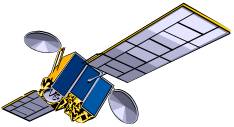
    Some Cospas-Sarsat satellites only relay the distress message transmitted by the beacon.  Other satellites relay the message and also gather details about the signal that will enable computers on the ground to estimate the beacon’s location.  Different kinds of satellites may be visible from your location at different times and, in remote areas, there can be an additional delay in the distress signal being relayed to a ground station for processing.


    3.    Beacon signal is transferred from satellite to LUT 

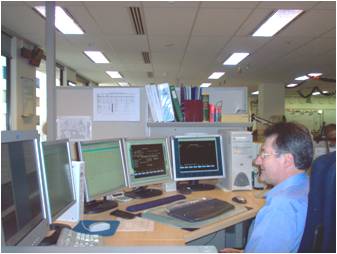
    Once detected by the Cospas-Sarsat System and relayed to a ground station (government-owned dish antennas and associated equipment called a Local User Terminal or LUT, that tracks the satellites), powerful computers analyze the signal from your beacon to estimate its location.


    4.    LUT transfers the beacon message and location data to its associated MCC


    The location estimate calculated by the LUT ground station (along with any location information that may have been transmitted from the beacon in its distress message), and all other information sent in the beacon distress message is sent by the LUT ground station to an associated Mission Control Centre (MCC), which performs the task of routing the distress message and the location estimates to the proper authorities.


    5.    The MCC transfers the Cospas-Sarsat alert message to two places:

    The Mission Control Centre (MCC) sends the alert message and estimated location to the governmental authority responsible for search and rescue in the area where the beacon is believed to be.  The message transmitted from the beacon also includes a “country code” that normally indicates the origin of the beacon. (For a ship or aircraft this normally would be the nation under which it is “flagged”.  For a PLB carried by a person, the code normally would be that for the country where the PLB was purchased or where the owner has registered the beacon.)  The alert message information and the location estimates also are sent to the government associated with the country code transmitted by the beacon.  In this way the authorities closest to the distress are alerted, as are the authorities of the nation of origin of the aircraft, vessel or person.


    6.    The rescue authorities take action:

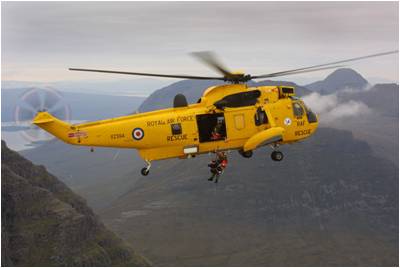
    All of the information in the beacon distress message, along with the location estimates, ends up at national-government Search-and-Rescue Points of Contact (SPOCs) that have the responsibility to react to distress alerts.  Crucial to the job of launching a rescue effort is knowing as much about the aircraft/vessel/person as possible, and having accurate emergency contact information for organizations or people who may be able to provide additional details about aircraft/vessel characteristics, travel plans, supplies likely carried by those in distress, etc.  Rescue authorities retrieve this crucial information from beacon registration databases.  That is why it is extremely important that you ensure that your beacon is properly registered with the correct governmental authorities.  Register your beacon by visiting www.406registration.com.


  • Inadvertent Alerts

    If a beacon is inadvertently activated, the beacon immediately should be turned off if possible. If the beacon does not have an “off” function, it should be shielded from the sky by placing it in a metal container (a solid metal box or a refrigerator, for example).

    Because an alert likely will be received by the satellites even if the beacon was on for only a short time, you should immediately contact the agency in your region responsible for managing Cospas-Sarsat distress alerts to prevent unnecessary assignment of search and rescue resources that may be needed for a real emergency somewhere else. If your region has a Cospas-Sarsat Mission Control Centre in the «Contact Lists» (select “MCC – Mission Control Centre” from the drop-down choices), please notify the centre in your area. Otherwise select “SPOC – SAR Point of Contact” from the «Contact Lists» and notify them of your inadvertent alert. The «Contact Lists» are available under our Professional website.

    There is no penalty for inadvertent activation of a beacon if there was no malicious intent.


    CNES — Beware of False Alerts

  • Изменение Beacon собственности

    Поддержание должным образом регистрационной информации вашего радиобуя может быть равносильной ситуации между жизнью и смертью. Точные регистрационные данные вашего радиобуя позволят поисково-спасательным службам в чрезвычайной ситуации получить важную информацию о вас, вашем самолете или судне и людях, которые могут предоставить ценную информацию о вас (ваши экстренные контакты).

    В обязанности владельца радиобуя входит гарантирование регулярного обновления  регистрационных данных радиобуя. Особо рекомендуется, чтобы каждые два года вы затратили по крайней мере несколько минут, чтобы просмотреть и обновить вашу информацию в регистрационной базе данных радиобев. В ряде стран это обязательное требование.

    Если вы продаете или передаете в пользование радиобуй новому владельцу, то вы ДОЛЖНЫ обновить регистрационные данные в той базе, где ваш радиобуй  зарегистрирован, чтобы указать эти изменения. Вы также должны проинструктировать нового владельца, каким образом зарегистрировать радиобуй на себя. Новый владелец радиобуя обязан должным образом предоставить свою регистрационную информацию и идентификацию самолета/судна. Обновите свою регистрационную информацию или зарегистрируйте недавно приобретенный вами радиобуй здесь.

    Когда изменение владельца радиобуя самолета, судна или жителя одной страны переходит к самолету, судну или жителю другой страны, то в большинстве случаев шестнадцатеричная идентификация (Hex ID), в электронном виде запрограммированная в радибуе, должна быть повторно запрограммирована компетентным сервис-центром, чтобы изменить “код страны”. Это важно потому, что этот код страны определит уведомление к спасательнной операции определенных властей в определенных районах, когда ыы активируете свой радиобуй в чрезвычайной ситуации.

    Также обратите внимание на то, что, когда код страны маяка изменен, соответствующая база данных для регистрации радиобуя может также измениться. Выясните, где зарегистрировать ваш радиобуй с новым кодом страны здесь.

  • обслуживание маяка

    Аварийные радиобуи 406 МГц — это устройства для обеспечения безопасности жизни. Это сложные радиопередатчики и их надлежащее функционирование в чрезвычайной ситуации зависит от надлежащего обслуживания. Вы ДОЛЖНЫ поддерживать свой аварийный радиобуй 406 МГц в соответствии с инструкциями изготовителя. Для авиационных АРМ и морских АРБ требования и процедуры обслуживания радиобуев и их внешних компонентов содержатся в национальных инструкциях или международных стандартах. Требования к обслуживанию радиобуев также могут регулироваться местными властями. Как правило, положения по техническому обслуживанию включают (но не ограничиваются ими):

    •             Периодические физические проверки,

    •             Периодические самопроверки радиобуя,

    •             Замену батарей в соответствии с инструкциями изготовителя,

    •             Периодический техосмотр и обслуживание сервис-центром, одобренным со стороны изготовителя                              радиобуя.

    Очень важно, чтобы владельцы радиобуев выполняли регулярные визуальные осмотры своих устройств с целью обнаружения физических повреждений (трещины, коррозию) на корпусе или других частях, которые могут вызвать ложную активацию радиобуя и/или вызвать несрабатывание радиобуя в реальной чрезвычайной (аварийной) ситуации.

    Особенность самопроверки радиобуя, которая описана в руководстве для владельца радиобуя, разработана для того, чтобы проверить правильное функционирование электроники радиобуя, проверяя все его главные компоненты, включая радиопередатчик и батарею. Самопроверку радиобуя может выполнить сам владелец радиобуя. Самопроверка должна быть выполнена в регулярных временных интервалах, как рекомендует изготовитель радиобуя. Необходимо немедленно связаться с изготовителем радиобуя, если самопроверка прошла неудачно. Избегайте проводить самопроверку радиобуя более часто, чем рекомендует это изготовитель, если у вас нет на то причины (подозрение на проблему с радиобуем). Для работающих от батареи радибуев активация при самопроверке радиобуя требует небольшое количество энергии батареи. В свзи с этим чрезмерные активации самопроверки могут преждевременно исчерпать эпергию батареи радиобуя, вызывая неадекватную работу батареи в чрезвычайной ситуации.

    Замена батареи должна быть выполнена не позднее чем дата, обозначенная на этикетке радиобуя, либо после активации радиобуя в чрезвычайной ситуации. При каждом обычном контроле радиобуя проверяйте время следующей замены батареи. Возможно, что вам следует заменить батарею ранее той даты, что обозначена на этикетке, если вы провели чрезмерное количество самопроверок. Батарея должна быть рабочей, чтобы гарантировать надлежащее функционирование и достаточный срок службы радиобуя для его активирования в чрезвычайной (аварийной) ситуации.

    При замене всегда используйте те батареи, которые как часть оригинального оборудования получили одобрение типа Коспас-Сасат и как определяет изготовитель радиобуя или один из его одобренных сервис-центров. Использование подержанных батарей, не одобренных изготовителем (купленных, например, у каких-нибудь онлайн продавцов), может привести к неадекватной работе радиобуя в чрезвычайной ситуации.

    Если у вас есть вопросы по обслуживанию радиобуя или замене его батареи, пожалуйста, консультируйтесь по этим вопросам с изготовителем радиобуя, используюя контактную информацию в руководстве пользователя. Контактную информацию изготовителей радиобуев также можно найти в разделе «Contact Lists» (контакты) на нашей домашней странице для профессионалов.

  • Избавление от Старых Маяков и Старых Батарей

    В конце срока службы радиобуя от него нужно избавляться осторожно, чтобы предотвратить возможность ложных срабатываний. Ложные срабатывания могут отвлечь ограниченные поисково-спасательные ресурсы от реальной чрезвычайной (аварийной) ситуации, ставя под угрозу другие жизни.

    Если вы решаете избавиться от старого, ненужного радиобуя, то должны для этого выполнить определенные шаги. Не выбрасывайте радиобуй в мусорный контейнер или ведро. Если вы это сделаете, то из-за длительного времени кожух и электроника радиобуя могли повредиться и могут вызвать ложные срабатывания, например, в куче мусора. Вместо этого вам необходимо демонтировать батарею и ясно маркировать на внешней стороне радиобуя, что он был дезактивирован (чтобы никто по ошибке не пытался использовать его в реальной чрезвычайной ситуации). Вы должны обновить свою регистрационную информацию в базе данных и указать, что вы избавились от радиобуя.

    Батареи радиобуя содержат химически агрессивные вещества, которые могут быть опасны для окружающей среды и вызвать ранения. Всегда обращайтесь с батареями в соответствии с имеющимися инструкциями изготовителя и местными распорядительными инструкциями.

    Когда это возможно, то компоненты вашего старого радиобуя и старых батарей радиобуя должны быть переработаны на соответствующем для этого оборудовании. Для больших консультаций обращайтесь к изготовителю радиобуя, используя контактную информацию в руководстве пользователя радиобуя. Контактную информацию изготовителей радиобуев можно также найти в разделе «Contact Lists» (контакты) на нашей домашней странице для профессионалов.

Этот сайт зарегистрирован на wpml.org как сайт для разработки. Переключитесь на ключ производственного сайта, чтобы remove this banner.